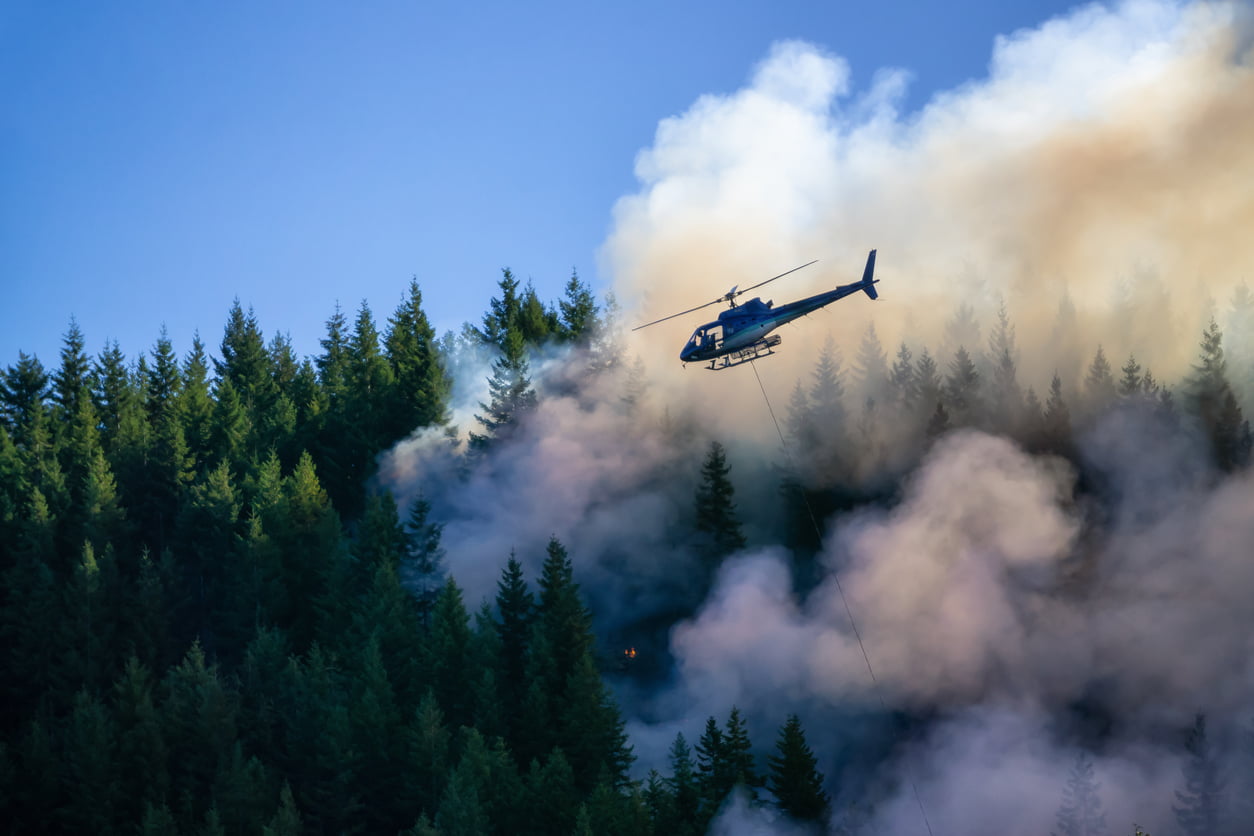
Wildfire season in Canada is once again proving to be devastating. As of June 2025, wildfires have already scorched over 3.7 million hectares of land nationwide, well ahead of last year’s pace, triggering mass evacuations, air quality warnings, and significant economic disruptions. While provinces like Alberta and British Columbia have traditionally been wildfire hotspots, Ontario is now facing a growing wildfire threat, especially in its northern and remote regions.
In 2023, Canada experienced its worst wildfire season on record, with over 18 million hectares burned. Unfortunately, this year is shaping up to rival those figures. However, beyond the environmental impact, Canadian businesses are becoming increasingly vulnerable, especially when insurance coverage fails to keep pace with the realities of climate change. Let’s explore how wildfires are affecting industries, what it means for your business, and how the proper insurance protection can make all the difference.
Canadian Businesses and Industries Most Affected by Wildfires
1. Tourism and Hospitality
Tourism operators in Ontario, including those near cottage country and national parks, are seeing a sharp decline in bookings due to wildfire-related closures, smoke alerts, and roadblocks. Local economies in Northern Ontario and along Lake Superior have been hit particularly hard. Summer events have been cancelled, and travel advisories are discouraging both domestic and international visitors.
Fun fact: In 2023, wildfire smoke shut down tourism in Tofino, B.C., and similar trends are emerging in Ontario this year, as popular destinations see occupancy rates drop by more than 60%.
2. Forestry and Lumber
Wildfires in Ontario’s boreal forests have led to the suspension of logging and mill shutdowns, disrupting lumber production and supply chains. With ongoing rebuilding efforts after last year’s housing boom, the shortage in softwood lumber is causing prices to spike again, slowing down new home construction and increasing renovation costs.
3. Mining and Natural Resources
Mining operations in northern Ontario have faced temporary shutdowns due to road closures, evacuation orders, and air quality hazards. Critical minerals like nickel, cobalt, and lithium—key to EV battery production—are at risk of supply delays. Companies operating in the Ring of Fire region are now factoring wildfire response planning into their operational budgets.
4. Agriculture and Food Supply
Smoke and fire damage are affecting Ontario’s grain and crop yields. Livestock evacuation and loss of grazing land are increasing operating costs for farmers. Meanwhile, grain transportation by rail remains a concern as major carriers reduce speeds and reroute traffic to avoid affected areas.
5. Retail and Small Businesses
Power outages, road closures, and reduced foot traffic are straining local businesses, especially in rural communities. The uncertainty of wildfire spread has made it harder to plan inventory, staffing, and logistics—forcing some businesses to close their doors indefinitely.
The Economic Toll of Wildfires on Canadian Businesses
According to the Canadian Interagency Forest Fire Centre (CIFFC), the number and severity of wildfires are trending higher each year due to longer dry seasons, hotter temperatures, and increased lightning activity—hallmarks of climate change.
Oxford Economics estimates that wildfires could shave up to 0.5% off Canada’s GDP in Q3 2025, with ripple effects across insurance, energy, construction, and health care. Smoke inhalation alone is expected to add tens of millions in public health costs, especially in urban centres like Toronto, Ottawa, and Sudbury that are now facing more frequent air quality alerts.
Insurance Industry on High Alert
Wildfire-related insurance claims have risen over 300% in the past five years in Canada. In 2023 alone, insured losses exceeded $3.1 billion, with wildfires accounting for a significant portion. In response, many insurers are tightening coverage or increasing premiums—especially for businesses operating in high-risk zones.
Before 2009, Canada averaged about $450 million in insured losses per year. In the 2020s, losses regularly surpass $2 billion annually.
Some major global reinsurers are re-evaluating their participation in the Canadian market altogether, which could lead to reduced availability of wildfire coverage and more restrictive policy terms. Here’s more information about different coverages to bundle to create the most comprehensive coverage for your business.
Protecting Your Business: What Insurance Do You Need?
Review Your Business Insurance Policy
Many commercial insurance policies do cover fire-related losses—but not all include wildfire-specific damage, especially when classified as an “act of nature.” Make sure your policy explicitly covers:
- Fire and smoke damage
- Evacuation-related closures
- Business interruption from natural disasters
- Contents and equipment protection
- Loss of income due to damaged supply chains or infrastructure
Business Interruption Insurance
Business Interruption insurance policies (BI) give you coverage when you’re unable to run your business as usual because of damage claims, such as fire. It can provide compensation for net income loss during the closure period and any ongoing operating expenses. According to a report from the Federal Emergency Management Agency (FEMA), 40% of businesses do not reopen following a disaster. On top of that, another 25% fail within one year.
Depending on your policy and coverage limit, some of these expenses can include:
- Utilities (hydro, electricity)
- Mortgage, rent or lease payments
- Tax and loan payments
- Cost of moving to a temporary location
- Employee payroll
- Lost profits
- Repairs and construction for rebuilding
Read on to learn more about our wildfire prevention tips for your business and home!
Property Insurance with Wildfire Endorsement
Standard property insurance may not be enough. Ensure your policy has a wildfire or natural disaster endorsement that accounts for total loss, rebuilding, and smoke remediation. Ask your isure broker if you qualify.
Environmental Liability Insurance
If your business handles chemicals or pollutants, Environmental Liability insurance protects you in case wildfires cause contamination or hazardous exposure to your Canadian business.
Preparing for Wildfire Season: Business Resilience Tips
Even if you’re not in a traditionally fire-prone region, Ontario businesses need to start thinking proactively. Here’s how:
Create a Wildfire Preparedness Plan
Identify evacuation routes, have an emergency plan and fund in place, secure offsite data backups, and ensure staff know their roles in a crisis.
Invest in Fireproofing
Clear flammable materials from your property, install ember-resistant vents, and maintain a defensible space.
Use Air Quality Monitoring Tools
Install indoor air purifiers and monitor tools like IQAir or the WeatherCAN app to track local smoke advisories.
Update Insurance Regularly
Work with an insurance broker (like isure!) to review and adjust your policy at least once per year to reflect new climate risks.
Wildfires and Canadian Businesses: Conclusion
We hope this information helps to provide a better understanding of the relationship between wildfires and Canadian businesses. This is also a good time to review your business insurance policy to confirm whether or not you have wildfire coverage. Many insurance plans claim to cover fire damage. However, in some cases, this is only applicable to fires that were caused by the actions of the business or arson. Often, “acts of nature” are not included in business insurance plans unless specifically requested. Contact your isure business insurance representative today to ensure that your business is covered. If not, you may still be able to add this coverage.
Wildfires Can Strike Without Warning—Is Your Business Protected?
Get a commercial insurance quote today and make sure your business is prepared for the unexpected.


Canada is experiencing its most destructive wildfire season on record, Read more

Experiencing wildfire smoke or poor air quality in Ontario or Read more

Experiencing wildfires in your area? Follow our wildfire prevention tips Read more