
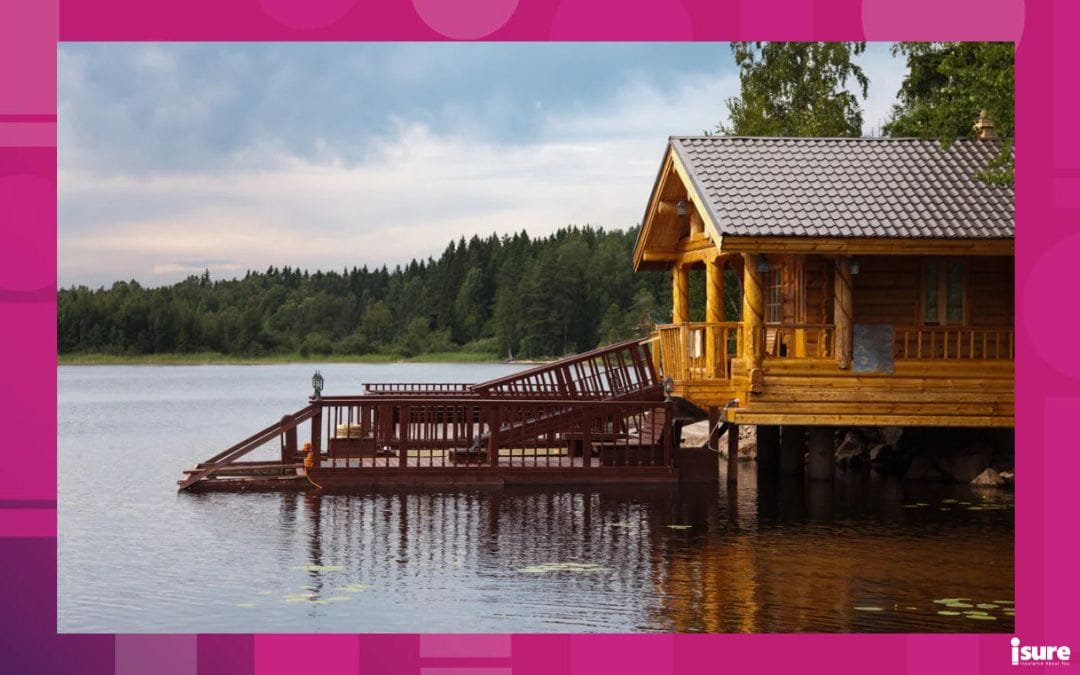
If you are like many cottage owners today, you may want to rent your vacation property to help offset the cost of ownership. The type of insurance coverage you will need for the property is tied directly to how you intend to use it. Considerations like: how much time is spent there? Year–round or sporadic use? Is it a rental property or a family retreat? You must understand that homeowners’ policies do not fully cover your property when renting it out. As you are gaining income from renting out the property, it is considered “commercial use” during this time. For this reason, insurers need to understand your intentions regarding renting property. If you are looking to get the most out of your home away from home, consider the information below about rental cottage insurance.
Rental Cottage Insurance: Does It Need To Be The Same As Your Home Insurance?
Many insurance providers will require you to have their home insurance policy to insure recreational properties. A rental cottage must carry its insurance that reflects this separate commercial use. This type of use carries specific risks requiring coverage under an individual insurance policy.
Rental cottage insurance covers many aspects of your primary home insurance, including property and contents insurance and liability coverage. It is, however, specific to the liability of rental use.
Rental Cottage Insurance: What Does An Insurer Look For?
Your insurance broker will want to know specific details about the property, such as:
- Emergency services access: The distance from the cottage to a fire hall or hydrant will affect your rates and the number of smoke detectors installed.
- Occupancy: The number of weeks the property will be rented out and how long you intend to occupy it. According to the Insurance Bureau of Canada, “Coverage for certain risks, such as water damage or vandalism, may be more difficult or expensive to arrange, due to part-time occupancy.” When using/renting the property year-round, the vacancy issue affecting your rates is reduced.
- Management: Your insurance broker will also want to know how often you check the property or if you will hire a property management company. They will also need to know your vetting process for prospective users.
- Add-Ons: You must notify your insurance company if you will be renting any watercraft or recreational equipment with the property. Watercraft liability insurance can be added to your rental insurance or handled separately.
- Building details: The condition of the physical building itself (and any outbuildings) will need to be detailed, including its age, square footage, and construction type. Information surrounding the age and type of the roof, heating, and plumbing systems, as well as the approximate value of the contents, will also be required.
Do I Need Rental Coverage Insurance?
Yes. While home-sharing companies, such as Airbnb, offer insurance, it would be secondary to your insurance. Your insurer can deny your claim or drop you as a customer if you haven’t informed them that your cottage is being used as a rental property, which increases its risk exposure.
When speaking with your isure broker, ask about rental income coverage. If there is an insured loss (something that prevents you from renting) and you lose the rental income, this coverage will pay you the difference. Some insurance companies include rental income replacement in a cottage insurance policy, while others may add this coverage to your cottage insurance as an endorsement.
Rental Properties: How Many Are In the Area?
While this doesn’t necessarily indicate saturation levels, it will show how competitive the market is. You can do preliminary research using Airbnb, Vrbo Canada, and Cottages in Canada. Your local store or realtor may also have advertisements posted to give you an idea of your potential competition for rental dollars.
Rental Cottage Insurance: What Needs Insuring?
You should consider insuring recreational items such as boats, ATVs, jet skis, snowmobiles, canoes, and kayaks. Some items (like trailers and canoes) may be covered under your home or cottage insurance policy, while others, like larger watercraft, require separate insurance policies.
It is not mandatory to be insured when riding on private property. However, making your policy worthwhile takes only one accident or crash. The upside, however, is that you may get a discount on vehicle coverage if you bundle your policies with the same ATV insurance company. It’s important to keep in mind that some insurance companies include rental watercraft liability coverage in a cottage insurance policy, so ask your isure broker for help while researching.
Rental Cottage Insurance: Do I Need Third-Party Liability Insurance?
Yes. You and your cottage guests will want to make sure your recreational items (boats, ATVs, jet skis, canoes, kayaks) are insured when in use. Some insurance brokers may recommend $1-2 million in liability coverage. When considering the costs of legal fees and judgments for liability claims, having coverage in place is a good idea if you offer these rental extras.
Some rental owners suggest that renters rent a motorboat separately if they want one during their stay. A nearby marina can provide the appropriate training courses, boat licenses, and insurance coverage.
Leaving Instructions At Your Rental Property
According to OTIP.com, you should leave your rental guests a detailed guidebook that contains all the information they’ll need for a safe and enjoyable stay. Your resource guide should include:
- Instructions for safely operating appliances like woodstoves or other heating units.
- A detailed list noting the location of all smoke detectors, carbon monoxide detectors, fire extinguishers, life jackets, and other safety equipment.
- Information on secure garbage disposal and how to prevent unwanted visits from local wildlife.
- Guidelines for your septic system best practices, if applicable.
- Emergency contact numbers, including a number where you can be reached at all hours.
- Manufacturer’s manuals for all recreational equipment, if your rental agreement includes guest use.
- Instructions on how to operate the water tank and prevent frozen pipes in winter.
Rental Cottage Insurance And Outbuildings
Some insurance packages include limited coverage for outbuildings (such as a dock, garage, or boathouse). This information is often covered under your policy’s Detached Private Structures portion. You can also look into endorsements available as an add-on for additional coverage to ensure you are adequately protected. Some of these additions include damage from ice buildup or overland water.
Contents Coverage: What’s Included?
Like home policies, some cottage property policies will automatically include the items inside your cottage (contents) up to a specific limit. This coverage applies to contents permanently kept at the cottage, like beds and other furniture. Your primary home insurance policy will cover anything you bring back and forth, such as clothing. Creating and maintaining a home inventory of your contents will help you keep track of items left in the cottage. It will also be a checklist for you between rental stays each season. Updating this checklist annually will help you track property purchases, and you can use that information to review your coverage.
Who Will Look After My Property?
Part of the allure of having a second home-away-from-home is the idea of it being a “getaway”. Most second-home owners are remote from their properties, so how you intend to maintain the property is a significant consideration. It may not be reasonable for you to make the trip to check and clean the property between rental stays. One option is to look into a property management service. Real estate agents in the area may have connections to full-service companies, cleaning services, and/or caretaking-only options.
How Can I Lower My Rental Cottage Insurance Premiums?
Like home ownership, regular safety measures can lower your insurable risk for rental cottages. Consider adding equipment, such as installing fire alarms, security cameras, burglar alarms, and backup generators.
To assist in lowering the damage to the property, consider the following:
- Keep your boat and other recreational vehicles off-limits to the renters. This way, you can avoid purchasing special vehicle insurance.
- Buy a first-aid kit that renters can use in case of minor injuries.
- If your property is next to a body of water, install lifebuoy rings in an emergency. They could reduce your liability in the event of an accident involving the renters.
- If you plan to rent your cottage through a home-sharing company, check if they offer less pricey insurance coverage.
- Combining (or bundling) your home, seasonal home, recreational vehicles, or car insurance with the same insurance company can save you up to 10% with some insurers.
- Investigate whether or not you qualify for Claims-free, Loyalty, and Mature-age discounts.
- Purchasing smart water devices, such as leak detectors and smart shutoff valves, will help to stop leaks before they destroy your property.
According to canadadocks.ca, people rent cottages for various reasons. A shared family cottage becomes a source of supplemental income, and later becomes an investment and a retirement property. No matter the reason, the result is the same: a money-making opportunity that can provide long-term benefits. Suppose you consider maximizing your second-home investment to benefit you in the long run. If you have any questions, please speak to an insurance broker at isure to get the most out of your property.
Peace of Mind for Your Second Home
Protect your cottage year-round — Get a free insurance quote today!


Creating an Airbnb turns your home into a business property. Read more

Lakeside retreat? Countryside property? Rental property? isure's got you covered Read more

Purchasing an investment property for the first time can be Read more