
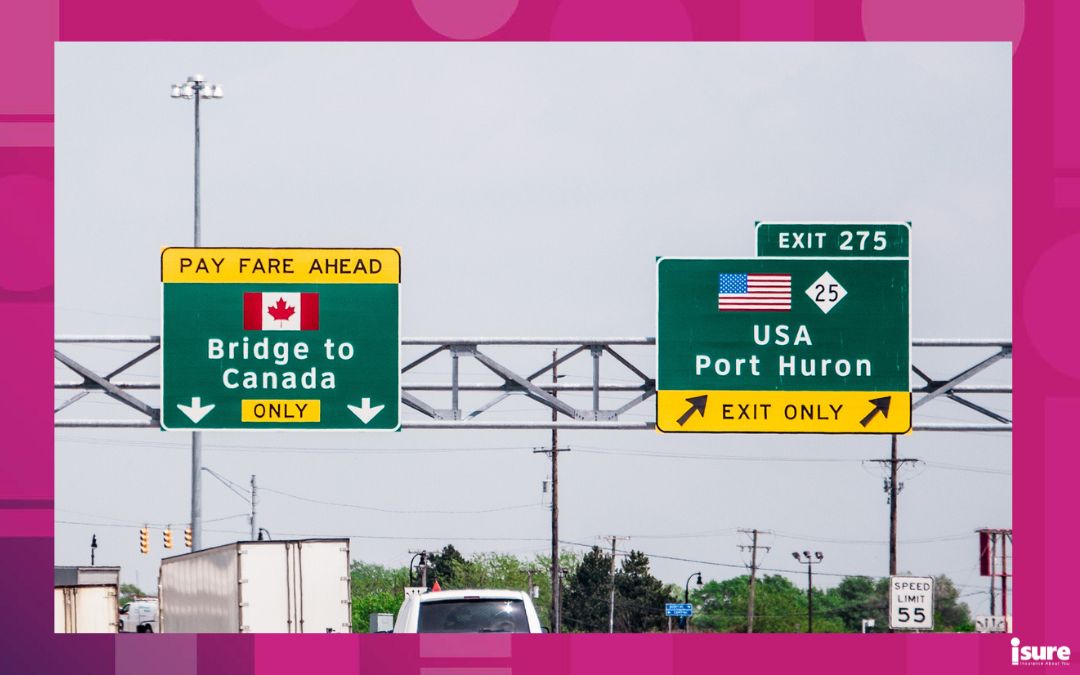
The concept of snowbirds in Canada is quite common. Every year, when winter arrives, many Canadians flock to warmer parts of the United States, such as Florida, to escape the snow. However, recent changes to the U.S. border may have snowbirds thinking twice before their next getaway south. Are you a snowbird or do you want to become one? Let’s take a look at the recent changes at the U.S. border for Canadian travellers.
What is the Registration Process at the U.S. Border?
As of April 2025, many Canadian citizens travelling to the United States for extended periods must register with the U.S. Government. If not, they can face potential fines or even jail time. This recent requirement stemmed from an executive order signed by US President Donald Trump on his first day in office. Canadians and any non-American citizens over the age of 14 who will be in the U.S. for more than 30 days must register with U.S. Citizenship and Immigration Services (USCIS).
As of now, the registration process at the U.S. Border will depend on the reason you are crossing. For frequent travellers, such as snowbirds, an online application, background check, and a pre-approved in-person interview are necessary.
However, it appears fewer people are having a smooth experience when crossing the U.S. Border, especially snowbirds.
Snowbirds Fingerprinted and Photographed at U.S. Border
Within the last month, several snowbirds travelling south reported they were both fingerprinted and photographed at the U.S. border. U.S. Customs and Border Protection (CBP) told CBC News that this is now part of standard procedure when registering for an extended winter stay.
One particular couple, Jacquie and Steve Ree of Ladysmith, B.C., was aware of the new registration requirements for travelling and staying in the United States for more than 29 days. When a CBP officer said they could complete the process at the U.S. border, they agreed. Unfortunately, they were unaware of what that process entailed. Jacquie Ree stated they were sent to secondary inspection, where their entire motorhome was searched.
“I’m watching them open all our hatches, and we’re thinking, ‘Oh my god,'” she said. “They went through our whole RV.”
According to Ree, she and her husband waited an hour and a half at the U.S. border. From there, they were stopped by a CBP officer who stated they couldn’t register at the U.S. border after all. However, just before they left, a third officer said he could register the couple. From there, he photographed them and collected their fingerprints for data collection. The couple was charged a $60 U.S. fee for registering at the border.
Registration Confusion Continues at the U.S. Border
Confusion about U.S. border registration rules has been mounting since an executive order was issued earlier this year. This order required foreign visitors staying longer than 30 days to register with the U.S. government. Those who don’t comply can face fines of up to $5,000 US or even jail time.
This requirement has been in effect since April. However, as the new snowbird season looms, this is the first time many Canadians are dealing with the new rules at the U.S. border. As a result, there is much uncertainty and frustration. Air travellers are typically exempt from the registration requirement because they receive an electronic arrival record (I-94) upon entering the U.S. On the other hand, land travellers often don’t receive one.
Land Travellers Given Two Options to Obtain Their I-94
According to CBP, land travellers have two options for obtaining their I-94. They can:
- Apply through the I-94 website seven days before entering the United States.
- Alternatively, they can register at the U.S. border.
Jessica Turner, a spokesperson for CBP, told CBC News that whichever method they choose, they will be charged $30 per person. Furthermore, officers will continue to photograph and fingerprint them at the U.S. border. This is part of the new I-94 application process.
G-325R: An Alternative To Applying at The U.S. Border
For travellers who still need to register, snowbird organizations and immigration lawyers state that another option is available. If CBP officers don’t insist that they apply for an I-94 at the border, they can register online at their destination. This is done by completing the U.S. Citizenship and Immigration Services (USCIS) form G-325R.
This form requests snowbirds to answer a list of personal questions, such as their U.S. address and marital status. This form must be completed within 30 days of arriving at the U.S. border. This comes with no fee and no fingerprinting requirement for Canadians. Snowbird Ree stated she was given the option at the border to fill out the G-325R form online. However, she instead chose to register at the U.S. border.
According to U.S. immigration lawyer Jennifer Behm, it will be up to individual CBP officers to decide whether to instruct travellers to apply for an I-94 at the U.S. border. Alternatively, they may offer them the option to complete the G-325R form upon arrival at their U.S. destination.
“It’s completely at their discretion,” Brehm told CBC News.
Snowbird Advisors Flooded With Questions
Stephen Fine is the President of Snowbird Advisor, which is a resource website for Canadian snowbirds. He states he will be tracking how the registration unfolds this season. He will then be updating snowbirds via his website.
“There are a lot of questions coming in,” Fine told CBC News in the same article above. “We get dozens of emails weekly about this issue.”
According to Fine, he has concerns that some snowbirds will be forced to apply for an I-94 at the border without being offered an alternative. This is to register online once in the U.S.
“I feel like there may be certain CBP offers that won’t give you the option or give you the impression that you don’t have another option,” he said.
For now, Canadians already in the U.S. can check the CBP website to see if they have already been issued an I-94 at the U.S. border. Snowbirds who have yet to travel past the U.S. border can check sites such as Snowbird Advisor for future updates.
Snowbird Travellers and the U.S. Border: Conclusion
As the snowbird season begins, Canadian travellers need to stay informed about the latest U.S. border registration requirements. Whether you’re applying for your I-94 in advance or completing a G-325R form after arrival, understanding the process can save you time, stress, and unexpected fees. With fingerprinting and data collection now standard for extended stays, preparation is key to a smooth trip south. Before you pack up for the winter, make sure your travel and home insurance are up to date so you can enjoy peace of mind under the sun. If you have questions about travel coverage or cross-border car insurance, reach out to an isure broker today—we’re here to help you stay protected wherever the road (or flight) takes you.

Travelling abroad can be exciting, but unexpected accidents can quickly Read more

With travel restrictions still in place, many Canadians are looking Read more

With recent news, many Canadians may be concerned about travelling Read more