
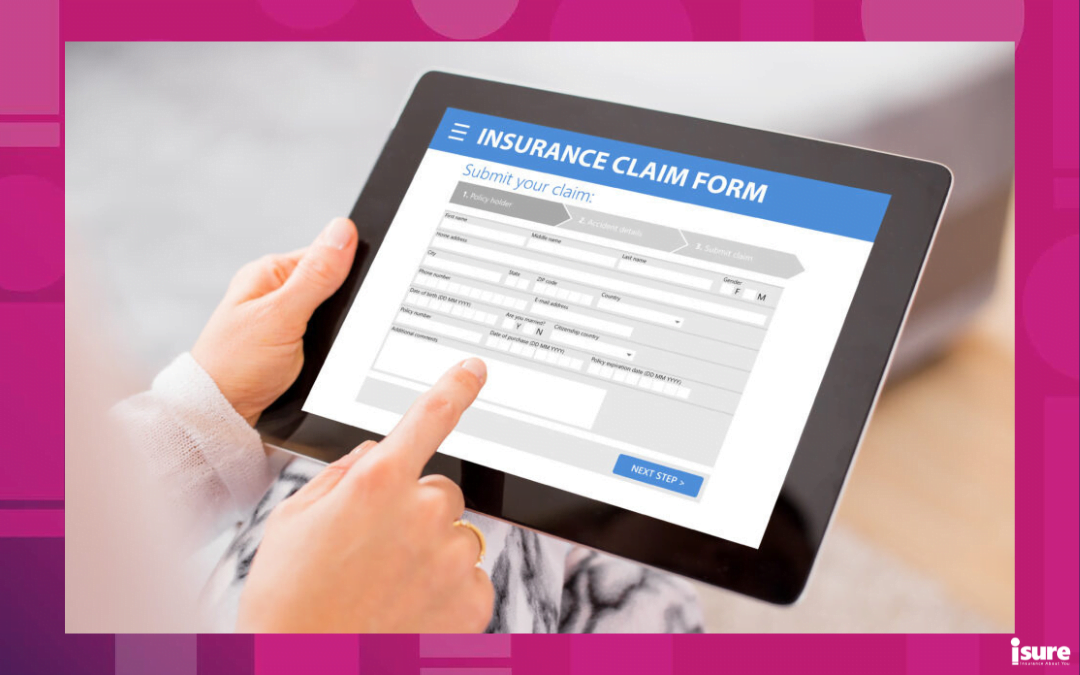
When we think of insurance fraud, we often consider it an uncommon occurrence. However, that is unfortunately not the case. Did you know that auto insurance fraud costs Ontario drivers over $1 billion annually? According to industry reports, nearly one in 10 Ontarians admits to engaging in some form of fraudulent insurance behaviour. While it might seem harmless to exaggerate a claim or stay quiet about the truth, insurance fraud is a serious criminal offence under Canada’s Criminal Code—and it can have lasting financial and legal consequences.
Whether you’re a driver, a policyholder, or someone shopping for coverage, it’s essential to know how to recognize, avoid, and report insurance fraud in Ontario.
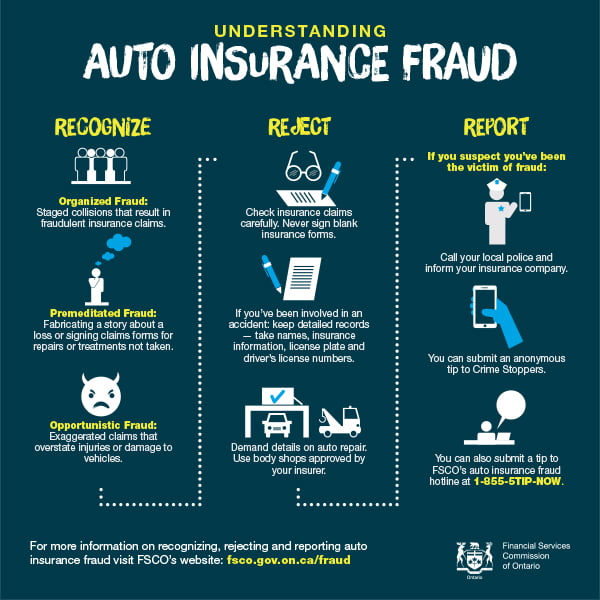
Photo via FSCO
What Is Auto Insurance Fraud?
Auto insurance fraud involves any intentional act of deception or misrepresentation that results in a financial gain through a false or inflated insurance claim. Policyholders, health care providers, repair shops, or third-party scammers can commit it. Auto Insurance is a criminal offence under the Criminal Code of Canada and also violates Ontario’s Insurance Act.
Common Types of Auto Insurance Fraud:
According to the Financial Services Regulatory Authority of Ontario (FSRA)—formerly known as FSCO—here are examples of auto insurance fraud:
- Staged collisions: Deliberately causing an accident to make a false claim
- Misrepresenting how a loss occurred: Lying about the circumstances of an accident
- Submitting inflated or false claims: Including damage or injuries that didn’t occur
- Claiming for pre-existing damage: Reporting old damage as new to get coverage
- Collusion with service providers: Working with clinics, mechanics, or lawyers to claim for treatments or repairs that weren’t needed or received
- Using false or misleading documentation: Providing fake invoices, police reports, or health assessments
Fraud isn’t always committed knowingly—it can also happen without your full awareness.
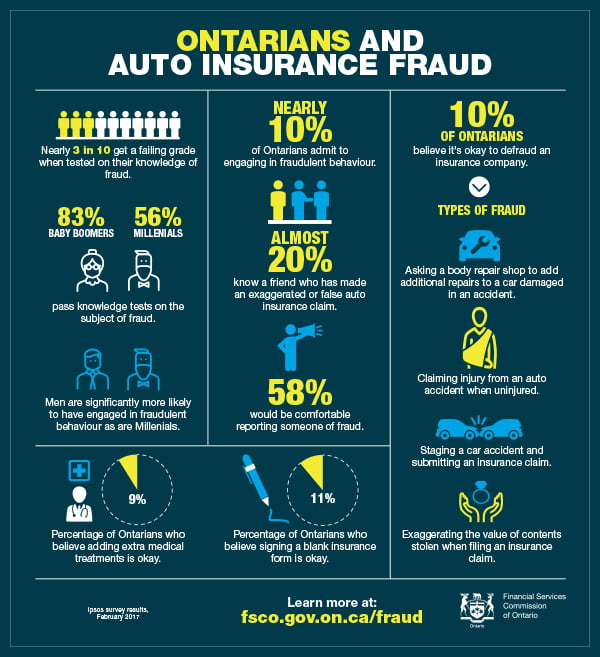
Photo via FSCO
How Auto Insurance Fraud Reporting is Changing in Ontario
In recent months, the method for reporting auto insurance fraud has been evolving. On June 3rd, Ontario’s Finance Minister introduced a rule authorizing insurers to report data to Ontario’s Fraud Reporting Service (FRS). This initiative aims to enhance data related to auto insurers’ fraud management efforts.
Along with the rule change, the Financial Services Regulatory Authority of Ontario (FSRA) issued guidance that “affects all insurers that are licensed to carry on auto insurance business in Ontario.” This guidance states that program objectives include quantifying the prevalence of auto fraud. Additionally, it entails establishing a baseline for fraud detection and identifying trends of auto insurance fraud within the industry. Reporting requirements are categorized into three tiers, corresponding to the circumstances in which insurers believe fraud has occurred. These include:
- Tier 1: Suspicion that an auto fraud event has occurred.
- Tier 2: “Reasonable grounds to believe” requires insurers to report to the FRS if they believe fraud has taken place.
- Tier 3: “Conclusion of fraud” means the insurer has enough evidence to be certain that fraud has occurred.
Examples of Fraud That Can Happen to You
Auto insurance fraud isn’t always about the scam you commit. You can also be the unwitting victim of someone else’s scam. Here are common auto insurance fraud scenarios Ontario drivers should watch for:
1. Staged Accidents
Some fraudsters deliberately cause minor collisions and make it seem like you’re at fault. They’ll often try to involve you in the claim or pressure you to admit guilt.
2. Fake Insurance Agents
Criminals may pose as licensed insurance agents to sell you fake policies. If you fall for it, you could be driving without valid coverage, unknowingly breaking the law.
3. Tow Truck and Repair Shop Scams
Certain tow truck drivers (called “chasers”) may receive kickbacks for towing vehicles to specific body shops. These shops may then inflate your repair bill or charge for services you didn’t receive, ultimately increasing costs for all policyholders.
How to Avoid Auto Insurance Fraud
Ontario’s insurance companies and law enforcement are actively working to combat fraud, but your awareness plays a critical role. Here’s how you can protect yourself:
Know Your Policy
Read and understand your auto insurance policy carefully. If you have any questions about your coverage or the claims process, please ask your broker or insurer.
Be Thorough and Honest
Fill out claim forms completely and accurately while double-checking all details to ensure there are no unintentional errors. Please don’t sign a blank insurance form or allow someone else to complete it on your behalf.
Document Everything
After being involved in an accident, collect:
- Names, addresses, and phone numbers of all involved parties
- License plate numbers and insurance details
- Photos of the scene, vehicle damage, and injuries
- Age and gender of the involved individuals and witnesses
Ask for Proof of Services
Always request itemized invoices from medical professionals or auto repair shops. Ensure you receive the treatments or repairs listed on your bills.
Review Your Insurance Statements
Please carefully look over the benefit statements from your insurer. Report any suspicious charges or services you don’t recognize
Be Cautious After an Accident
Do not feel pressured to sign any documents on the spot, and only deal with licensed professionals. Contact your insurance company directly to arrange towing or repairs.
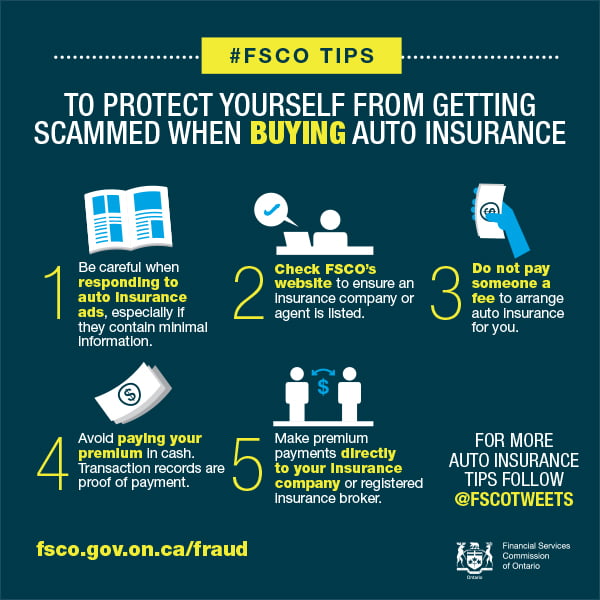
Photo via FSCO
What Are the Penalties for Auto Insurance Fraud in Ontario?
Fraudulent activity doesn’t just impact your premiums—it’s also a criminal offence. According to the Criminal Code of Canada, penalties for auto insurance fraud include:
- Immediate denial of your claim
- Cancellation of your insurance policy
- Higher premiums in the future
- Possible denial of future insurance coverage
- Criminal charges and jail time
- Up to 14 years imprisonment for fraud over $5,000
- Up to two years’ imprisonment for fraud under $5,000
Getting caught can also leave a permanent mark on your record, affecting your employability, credit, and ability to get insurance.
How to Report Auto Insurance Fraud in Ontario
If you suspect fraudulent activity or think you’ve been targeted, take action:
- Contact your insurance broker or provider immediately
- Report the fraud to your local police service
- File a tip anonymously to:
- Crime Stoppers at 1-800-222-TIPS (8477)
- FSRA’s Auto Insurance Fraud Hotline at 1-855-5TIP-NOW (1-855-584-7669)
You can also visit www.fsrao.ca for more tips and tools on how to detect and avoid fraud.
Conclusion
Auto insurance fraud affects everyone. It leads to higher premiums, slower claims processing, and strain on Ontario’s insurance system. By staying informed, acting with integrity, and reporting suspicious activity, you help protect not just yourself but all Ontario drivers. If you’re in the market for auto insurance or have any questions regarding auto insurance fraud, don’t hesitate to reach out to isure! Contact us or request a quote today.

Ontario is currently in a hard insurance market meaning that car insurance Read more

Was your recent insurance claim denied? We’ve got the most Read more

For years, auto theft has plagued major cities across Canada. Read more