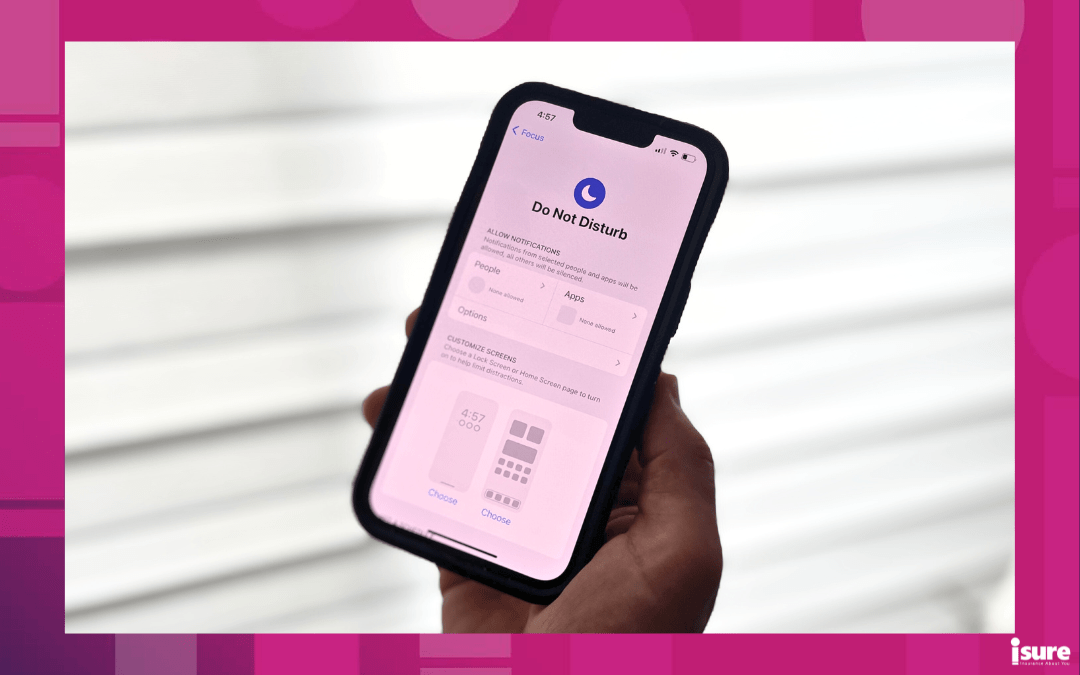
Distracted driving remains one of the leading causes of serious road collisions in Ontario. Even a brief glance at a smartphone can take your attention away from the road long enough for a dangerous situation to develop. With April recognized as Distracted Driving Awareness Month, it’s the perfect time for drivers to reassess their habits behind the wheel. Fortunately, modern smartphones now include tools designed specifically to help drivers stay focused. One of the most useful is the Driving Focus feature (formerly “Do Not Disturb While Driving”), which can automatically silence notifications while you’re on the road.
While technology can’t replace responsible driving, it can help reduce temptation and make it easier to keep your attention where it belongs—on the road. Here’s everything Ontario drivers should know about using their phone’s Driving Focus or Do Not Disturb feature and how it can help prevent distracted driving.
What is Apple’s ‘Driving Focus’ on Your Phone?
Apple first introduced Do Not Disturb While Driving in iOS 11, and the feature has since evolved into Driving Focus, which is part of Apple’s broader Focus Mode system. Driving Focus helps reduce distractions by automatically limiting notifications when your phone detects that you are driving.
When the feature is enabled, your phone can:
- Silence incoming calls, text messages, and app notifications
- Send automatic replies to contacts letting them know you are driving
- Restrict visual notifications on the lock screen
- Allow emergency alerts, alarms, and timers to come through
Your phone determines that you’re driving using several signals, including:
- Motion sensors and accelerometers
- GPS speed detection
- Bluetooth connections to your car
- Nearby Wi-Fi network movement patterns
If the system detects consistent movement at driving speeds, it will automatically activate Driving Focus. Drivers can still make hands-free calls using Bluetooth, voice assistants, or Apple CarPlay, which helps maintain safe communication without needing to touch the phone.
Passengers can also disable the feature if needed so they can continue using the device normally.
Android Options for Reducing Distracted Driving
Android devices offer similar tools designed to help drivers stay focused while on the road. Some common options include:
Google Assistant Driving Mode
This feature replaces traditional Android Auto phone interfaces and provides voice-based control for navigation, calls, and music without requiring manual interaction.
Android Do Not Disturb While Driving
Many Android devices include a driving-focused Do Not Disturb setting that silences notifications while connected to a vehicle’s Bluetooth system.
Android Auto
Android Auto integrates your phone with your vehicle’s display, allowing drivers to access maps, calls, and messages using voice commands.
Third-Party Apps
Apps like LifeSaver or SafeDrive can also block notifications and reward drivers for staying phone-free during trips.
Regardless of whether you use an iPhone or Android device, enabling a driving-focused mode is one of the easiest ways to reduce temptation while behind the wheel.
Why Distracted Driving Is So Dangerous
Distracted driving significantly increases the risk of collisions. Even a momentary lapse in attention can have serious consequences.
Research shows that drivers who use their phones behind the wheel dramatically increase their crash risk. Looking at a phone for just five seconds while driving at highway speed means travelling the length of a football field without watching the road.
Common types of distracted driving include:
- Texting or messaging while driving
- Checking social media notifications
- Adjusting navigation apps
- Taking phone calls without hands-free technology
- Eating or grooming while driving
- Managing passengers or pets in the vehicle
Among these distractions, smartphone use is one of the most dangerous, because it combines visual, manual, and cognitive distraction at the same time. This is why governments across Canada have implemented strict distracted driving laws.
Distracted Driving Penalties in Ontario
Ontario has some of the strictest distracted driving laws in Canada. If you are caught using a handheld device while driving, you may face significant penalties.
First Offence
Drivers can receive:
- A fine of up to $615 or more once surcharges are included
- 3 demerit points added to their licence
- A 3-day licence suspension
Second Offence
Penalties increase to:
- 6 demerit points
- A 7-day licence suspension
Third Offence
Drivers may face:
- 6 demerit points
- A 30-day licence suspension
Even actions that seem minor—such as checking a notification or holding a phone at a red light—can result in a distracted driving ticket. These penalties are designed to discourage dangerous behaviour and encourage drivers to stay focused.
How Distracted Driving Can Impact Your Insurance
Beyond fines and licence penalties, distracted driving convictions can also affect your car insurance rates. Insurance companies assess risk based on driving history. A distracted driving conviction signals that a driver may be more likely to file future claims.
As a result:
- Your insurance premiums may increase after a conviction
- Multiple offences may cause insurers to classify you as a high-risk driver
- Some insurers may decline to renew your policy if your driving record worsens
Driving convictions generally remain on your insurance record for three years, meaning the financial impact can last long after the ticket is issued. If a driver accumulates several tickets or collisions, they may need to seek coverage through insurers that specialize in high-risk drivers, which often comes with higher premiums. Avoiding distractions behind the wheel is one of the simplest ways to maintain a clean driving record and keep insurance costs manageable.
What is a High-Risk Driver?
Insurance providers may label a driver high-risk when their driving record indicates a higher likelihood of claims.
This classification can happen for several reasons, including:
- Multiple at-fault accidents
- Numerous traffic tickets
- Serious offences such as stunt driving or impaired driving
- Repeated distracted driving convictions
- Licence suspensions
Drivers classified as high-risk may face:
- Higher insurance premiums
- Limited coverage options
- Difficulty finding insurers willing to provide coverage
Maintaining safe driving habits is the best way to avoid this designation.
Tips to Prevent Distracted Driving
At the end of the day, the best way to save both time and money is to stay focused and avoid distractions while on the road. There are several things to practice aside from avoiding your phone! To stay safe, it is also important to do the following:
- Limit distractions from passengers
- Do not groom yourself or apply makeup
- Always keep both hands on the wheel
- Do not eat while behind the wheel
- Keep both eyes on the road!
Remember, limiting yourself from distractions is crucial when it comes to keeping you and others safe. If you are a new driver or a high-risk driver looking for an insurance policy, inquire with one of our isure brokers. Fill out our form to get a quote!
Drive with Confidence
Request your free car insurance quote now and get the coverage you deserve.


According to the Ontario provincial government, deaths from collisions caused Read more

Avoid costly fines and stay safe on the road with Read more

Driving while distracted can be as dangerous as driving under Read more