
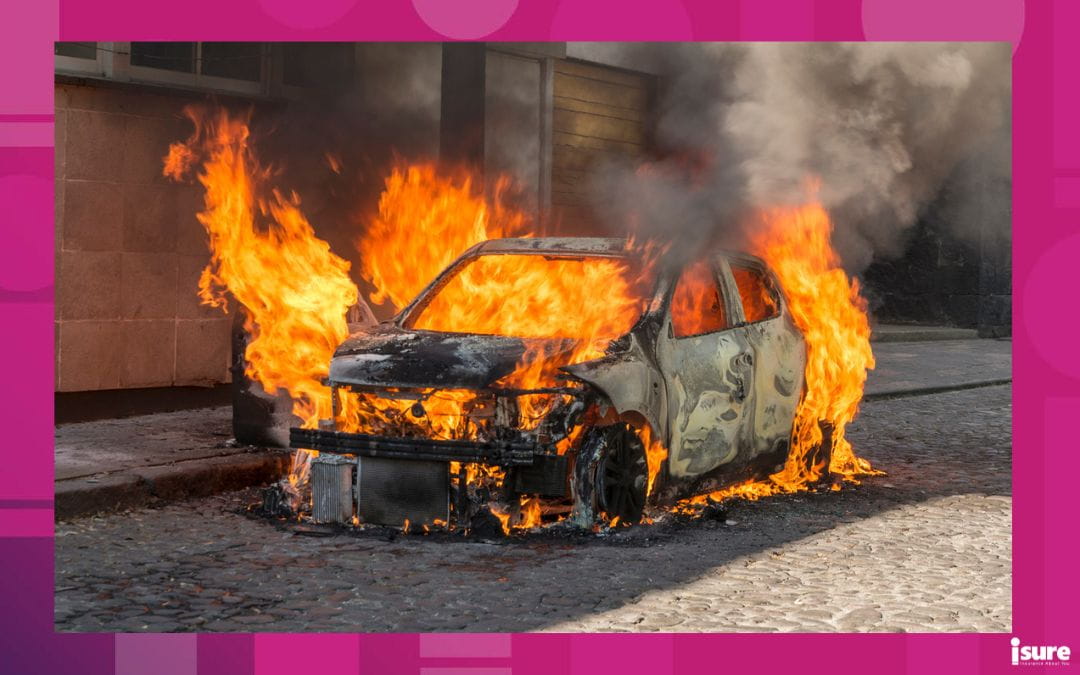
While car fires are rare, they can be extremely dangerous. They can cause anything from serious property damage to severe injury or loss of life. Understanding why vehicle fires occur, how to respond safely, and how insurance applies in Ontario can help drivers reduce risk and avoid costly damage. Here is a breakdown.
Common Causes of Car Fires
Most vehicle fires are unintentional and result from mechanical or electrical issues. Some common causes include:
Damage from Collision/Impact
Even a minor collision can damage electrical wiring, exhaust components, or fuel lines, potentially triggering a fire. The fires may start immediately or sometimes after the crash.
Mechanical and Electrical Failures
Different electrical and mechanical system problems, such as short circuits, faulty wiring, or battery issues, are the leading causes of car fires. Also, fuel system leaks can ignite when fuel, such as gasoline or diesel, comes into contact with heated engine components. When they come into contact, it can cause nearby systems to ignite.
Parked Vehicle Fires
Vehicles can catch fire even while parked or turned off. It can occur for various reasons, such as electrical faults, overheated components, or flammable materials stored too close to heat sources in and around the vehicle.
External Causes
Car fires can also be caused by vandalism, arson, or exposure to a nearby fire. One example of this is a house/garage fire that spreads to a parked vehicle.
Common Causes for Electric Vehicle Fires
While EV fires are rarer than those of gasoline-powered vehicles, they are still possible. Since electric vehicles do not use a flammable fuel source, they run on electricity. While modern EVs are built with many safeguards, such as robust battery cases, cooling systems, and safety software, it is still possible. Most EV fires are linked to one or more of the following factors:
Damage to Battery
Damage to an electric vehicle’s battery when in a car crash/collision can compromise the structure of its lithium-ion battery casing. This generates immense heat within the battery and may cause the vehicle to catch fire.
Battery Defect
Rare battery defects in EVs can also lead to fires. However, these issues are usually caught early on and handled through product recalls. When a flaw is discovered, such as a manufacturing error that makes the battery cells more likely to overheat, suppliers will investigate and notify owners.
Charging Issue
What to Do if Your Car Catches Fire
To start, if you smell a strong burning smell, smoke, or even flames while driving, you need to act quickly.
- Pull over immediately and safely: Signal, move off the roadway if possible, and stop as soon as it is safe to do so.
- Turn off the engine: Shutting off the vehicle can help reduce fuel flow and electrical activity that may worsen the fire.
- Evacuate the vehicle immediately: Get all occupants out. Do not attempt to retrieve personal belongings. Move at least 10 to 30 metres away from the vehicle.
- Call 911: Emergency services should handle all vehicle fires. Fires can escalate rapidly and may involve explosions.
- Do not attempt to fight the fire unless the fire is extremely small and you have a suitable fire extinguisher.
- Document when safe: After emergency responders arrive and the situation is under control, take photos and note details that may be needed for insurance.
How Car Fires Affect Auto Insurance in Ontario
Whether your insurance covers a car fire depends on your policy and the cause of the fire.
Mandatory Coverage vs. Optional Coverage
In Ontario, the mandatory portion of auto insurance (liability, accident benefits, and uninsured motorist coverage) does not cover damage to your own vehicle from a fire. To be covered for fire damage, you need optional physical damage coverage, most commonly:
- Comprehensive coverage: Covers fire damage that is not caused by a collision, such as engine fires, vandalism, arson, or fires affecting a parked vehicle.
- Collision coverage: May apply if the fire results directly from a collision, depending on the circumstances.
Note: If another driver causes a collision that leads to fire damage, their liability insurance may cover your vehicle damage.
Claim Investigation and Exclusions
Insurers will investigate the cause of the fire. Claims may be denied if:
- The owner intentionally set the fire, or someone acting on their behalf
- The damage is excluded under the policy (for example, certain mechanical breakdown scenarios)
- Fraud or misrepresentation is suspected
If the claim is approved, the insurer will determine whether the vehicle can be repaired or is a total loss. Payouts are generally based on the vehicle’s actual cash value, minus the deductible.
Impact on Premiums
A fire claim under comprehensive coverage may affect future premiums, although this varies by insurer. Some policies offer accident forgiveness or claim-free discounts that may reduce the impact, especially when the fire was not caused by driver negligence.
Car Fires: Conclusion
Knowing how to respond can protect lives, and understanding Ontario’s insurance rules can help drivers ensure they have the right coverage. Drivers concerned about fire protection should review their policies to confirm they carry comprehensive or collision coverage appropriate to their needs. If you have any questions about your auto coverage, contact us today.
Drive with Confidence
Request your free car insurance quote now and get the coverage you deserve.


House fires are one of the most devastating risks to Read more

If you find yourself involved in a collision, you may Read more