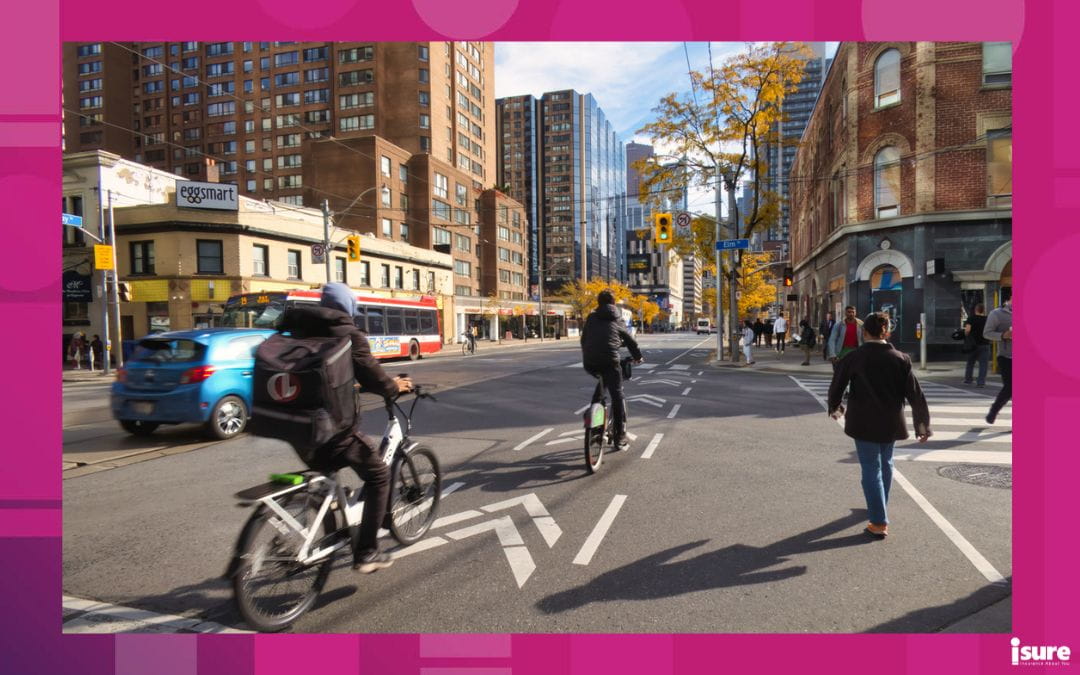
Biking is a popular and environmentally friendly way to travel across Ontario, but cyclists must follow specific biking laws to stay safe and comply with the rules of the road. Ontario traffic laws treat bicycles as vehicles, giving cyclists many of the same rights and responsibilities as drivers. From gear requirements and bike equipment standards to road-sharing rules and penalties for violations, understanding Ontario’s biking laws is essential to keeping safe.
Ontario biking laws require cyclists to follow the same traffic rules as drivers. Cyclists must equip their bikes with a bell, working brakes and lights when riding at night. Riders under 18 must wear an approved helmet, and bicycles are permitted on most roads, except on 400-series highways and on roads marked “No Bicycling.”
Biking Laws and Safe Cycling Practices
When it was first enacted in 1923, the Ontario Highway Traffic Act was primarily concerned with keeping cars and buggies safe on Ontario’s roads. Since then, the bicycle has become a popular mode of transportation among Ontarians, especially those living in big cities such as Toronto. Nowadays, bikers in big cities have just as many rights as cars when it comes to being on the road. With this comes the need to understand biking laws that protect them and restrict them.
Ontario, in particular, remains ahead of the game when it comes to biking laws. According to the Highway Safety Act, a bike is defined as a “vehicle with broad rights to be on roadways,” a definition many other provinces have yet to adopt.
Drive with Confidence
Request your free car insurance quote now and get the coverage you deserve.


What Safety Equipment Is Required For Bicycles In Ontario?
All cyclists should understand Ontario’s required bicycle safety equipment. These requirements help ensure that other road users, including drivers and fellow cyclists, can see and hear you while you’re riding. The Ontario law requires you to equip your bike with some basic safety equipment. Other equipment is optional.
Do You Need A Bell On A Bike In Ontario?
When on the road, you’ll want to be able to alert others to your presence. This is done with a bell or horn. Oddly enough, according to Section 75 (5) of the Highway Traffic Act, a gong is also acceptable. If caught biking without a bell, a $110 fine for noncompliance may be in order.
What Brake Requirements Apply To Bicycles In Ontario?
At a minimum, according to biking laws, bicycles need a back braking device that can cause the tire to skid on flat, dry pavement. In addition, cyclists should properly adjust their handlebar brake levers so they stop with at least 2.5 cm of space between the lever and the handlebar.
Are Bike lights Required In Ontario?
From half an hour before sunset until half an hour after sunrise, biking laws require cyclists to have a working light on their bikes to improve their visibility. The following types of lights are available as options:
- White or amber front light
- Red light or reflector on the rear
- White reflective material on the front forks (6 cm)
- Red reflective material on rear of frame (6 cm)
If your bike is not set up with a bike and you are biking during these hours, you risk a $110 fine under the biking laws.
What Are The Bike Helmet Laws In Ontario?
When it comes to biking laws in Ontario, helmet laws are the strictest. The biking helmet law in Ontario requires every cyclist under the age of 18 to wear an approved bicycle helmet. If your child is under 16, you are responsible for making sure they are properly equipped for biking.
To provide maximum protection, each helmet should follow these protocols:
- Fit level and square on your head without slipping when your head moves
- The helmet should have two finger widths between the eyebrows and the helmet
- Helmet straps should be flat against the face
- Helmet side straps should meet just below the ear
- Fasten the chin strap snugly, leaving enough room to fit one finger between your chin and the strap.
- Use the dial at the back or the sizing pads provided with the helmet to adjust the fit.
- Make sure the helmet has proper certification, which can include: Snell, CSA, ANSI, ASTM, BSI, SAA, CPSC
Where Can I Legally Ride My Bike In Ontario?
According to the Ontario Highway Act, bicycles are defined as vehicles that belong on the road. This means you can ride your bike on most Ontario roads and secondary highways. Many municipalities in Ontario offer special bicycle riding areas. These include the following:
- On-road: Shared roadways with signs, bicycle lanes, raised cycle tracks or bicycle priority streets.
- In-boulevard (bike paths or raised cycle tracks
- Separate multi-use bike paths
Where Is Biking Illegal In Ontario?
Though it should go without saying, biking laws forbid you from biking on any 400-series highways. This includes the 400, 416 and any other marked expressways.
You cannot ride a bike on the Queen Elizabeth Way in Mississauga, the Queensway in Ottawa, or any roadway marked with a “No Bicycling” sign.
However, Ontario does allow cyclists to ride on certain secondary highways, such as Highway 17 in Northern Ontario, when no safer or more practical alternative routes are available.
Biking Laws, Road Signs and Traffic Signals
Just like those behind the wheel of a car, cyclists have the same rights and responsibilities to obey all traffic laws and biking laws. If you disobey traffic laws while riding a bicycle, police can charge you and issue a fine of approximately $110.
Stop signs, in particular, are a common sign that cyclists tend to forget or ignore. Don’t forget that, just like a car, failure to stop at a stop sign comes with a $110 fine.
Can Police Fine Cyclists for Distracted Riding in Ontario?
Distracted driving is unfortunately all too common among drivers in Ontario. If caught driving and using your phone, you may be fined up to $3,000. When it comes to biking laws, the severity of distracted driving remains. According to Ontario law, there is no law prohibiting biking while distracted. With this in mind, it is far from a good idea to text while riding your bike!
Penalties for Non-Compliance With Ontario Bike Laws
Failing to follow Ontario’s bicycle laws can result in fines and penalties similar to those faced by motorists. The Ontario Highway Traffic Act classifies bicycles as vehicles and requires cyclists to obey traffic signs, signals, and equipment rules at all times.
Common violations and associated fines may include:
- Riding without a bell or horn: Fine of approximately $110
- Riding at night without the required lights or reflectors: Fine of approximately $110
- Failing to stop at a stop sign or red light: Fine of approximately $110
- Improper bicycle equipment or maintenance issues: Fines may vary depending on the violation
- Cyclists under 18 not wearing an approved helmet: Fine of up to $75, with parents or guardians potentially held responsible for riders under 16
In more serious situations, police can charge cyclists with offences such as careless cycling if they endanger other road users. Depending on the circumstances, these charges can result in higher fines and additional legal consequences.
Bundle All of Your Policies for Maximum Savings!
Speak with an isure broker to find out how.

Biking Laws In Ontario: Frequently Asked Questions
Do adults have to wear a bike helmet in Ontario?
No. Ontario law only requires cyclists under 18 years old to wear an approved bicycle helmet.
Can cyclists ride on sidewalks in Ontario?
Sidewalk rules vary by municipality. In many Ontario cities, adult cyclists are prohibited from riding on sidewalks.
Can cyclists get traffic tickets in Ontario?
Yes. Cyclists must obey traffic signs and signals and may receive fines for violations such as failing to stop at a stop sign.
Can cyclists use their phones while riding?
No. Though Ontario does not have a specific distracted cycling law, using a phone while riding can be dangerous and may contribute to careless cycling charges.
Do bicycles have the same rights as cars on Ontario roads?
Yes. Ontario law recognizes bicycles as vehicles and gives cyclists many of the same rights and responsibilities as drivers on public roads.
Do cyclists have to follow traffic lights and stop signs?
Yes. Cyclists must obey all traffic signals, stop signs, and road signs. Failure to do so can result in fines and increase the risk of collisions.
Can cyclists ride on highways in Ontario?
Cyclists cannot ride on Ontario’s 400-series highways or on roads marked with “No Bicycling” signs. However, some secondary highways permit cycling when no reasonable alternative route exists.
The Importance Of Following Biking Laws In Ontario
Understanding Ontario’s biking laws is an important part of staying safe and remaining responsible when on the road. From wearing the proper safety equipment and following traffic signals to knowing where you can legally ride, cyclists have a duty to follow the same rules that apply to cars.
Whether you’re commuting to work or riding for fun, by familiarizing yourself with Ontario’s bicycle laws, you can reduce your risk of accidents and remain safe! Remember, if you have any questions regarding bike insurance, don’t hesitate to reach out to us at isure today!

Whether you’re a seasoned cyclist or purchasing your very first Read more

New to Ontario and not sure of basic driving rules? Read more

If you are looking to grab your bike and hit Read more