

Understanding road signs is crucial for every driver in Ontario. Whether to alert drivers to oncoming danger or help them find their way, road signs are essential for all drivers. They help keep traffic flowing and, more importantly, help keep drivers and pedestrians safe. These road signs provide vital information about road conditions, regulations, and potential hazards, ensuring safety for all road users. Whether you’re a new driver preparing for your G1 test or an experienced driver looking for a refresher, this guide covers essential road signs and their meanings.
Why Road Signs Matter
Ontario road signs help regulate traffic flow, minimize accidents, and ensure road safety. Ignoring or misinterpreting these signs can lead to fines, severe accidents, and/or license suspensions. Understanding these regulatory signs is essential for passing your driver’s test and for responsible driving daily.
Categories of Road Signs in Ontario
Road signs in Ontario are categorized based on their purpose:
- Regulatory Signs (Red, white, and black): Indicate laws that must be followed.
- Warning Signs (Yellow and black): Alert drivers to upcoming conditions.
- Guide and Information Signs (Green, blue, and brown): Provide directions and other travel-related information.
- Construction Signs (Orange and black): Indicate construction zones and potential hazards.
Let’s explore the most common road signs that every Ontario driver should know.
1. Stop Sign (Regulatory Sign)
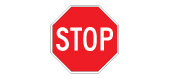
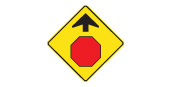
Above is a stop sign. When you see this eight-sided road sign, or red octagon with white lettering, it means that you must come to a complete stop before proceeding. Usually, there will be a line you must stop at; if not, stop at the edge of the sidewalk (or the crosswalk if there isn’t one). Continue once the way is clear or you’ve established the right-of-way. The sign on the right indicates that you are approaching a stop sign, so prepare to slow down.
Penalties for Rolling Stops
Common mistakes include rolling stops, failure to stop, and stopping past the designated line drawn on the road. If convicted, you will likely face fines of around $110 and three demerit points on your driving record. As a result, you will likely see a higher insurance premium at renewal.
2. Yield Sign (Regulatory Sign)
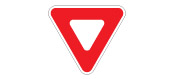
The yield sign is a red-and-white upside-down triangle. When you see this sign on the road, you must give the right-of-way to other drivers before proceeding. Always check for pedestrians, cyclists, and oncoming vehicles, and proceed cautiously when the way is clear.
Penalties for Failure to Yield
If you fail to yield, you may face fines of $60 to $500 and three demerit points.
3. Speed Limit Signs (Regulatory Sign)

You will see many speed limit signs on roads with different denominations listed. These are typically white, rectangular signs with black numbers. Speed limit signs are regulatory signs indicating the maximum legal speed permitted in the area.
Did you know that speeding violations are among Ontario’s most common traffic infractions? This underscores the importance of speed limit awareness for all drivers!
Penalties for Speeding
A speeding ticket in Ontario will remain on your driving record for three years from when you pay the ticket or are found guilty in court. Speeding fines can range from $12 per km to $500. This depends on how much you exceeded the posted speed limit. A conviction 50km+ over will be a stunt driving charge, and any of these convictions will likely label you a high-risk driver. As a result, your insurance premiums will increase significantly.
Drive with Confidence
Request your free car insurance quote now and get the coverage you deserve.


4. No Parking/No Stopping Signs (Regulatory Signs)
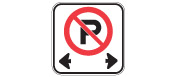
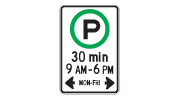
The two examples above are parking signs. The red circle with a crossed-out ‘P’ indicates ‘No Parking,’ and a crossed-out ‘S’ means ‘No Stopping.’ When you see the one on the left, it will always appear in a pair or group. In these areas, you can stop temporarily to drop someone off or unload items from the car, but you cannot park there for a prolonged period. However, the sign on the right with a P in a green circle and listed time limits has a similar meaning. When that sign is visible, you can park between the two signs only for the time allotted on the parking signs.
Penalties for Parking in a No-Park Zone
Some areas enforce strict penalties for stopping in fire lanes or school zones. Parking violation penalties can range from $15 to $500, depending on the severity of the violation. However, it’s important to note that most parking tickets will not affect your insurance premium.
5. Pedestrian Crossing Sign (Warning Sign)
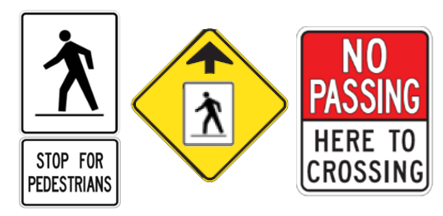
A pedestrian crossing sign is typically a yellow diamond with a pedestrian figure in the middle. This indicates a designated pedestrian crossing area, meaning you must yield to pedestrians, as they have the right-of-way.
Penalties for Failing to Yield at Pedestrian Crosswalk
Under the Highway Traffic Act, failing to yield at a pedestrian crosswalk in Ontario can result in fines of up to $1,000 and 4 demerit points.
6. School Zone Sign (Warning Sign)
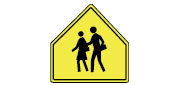
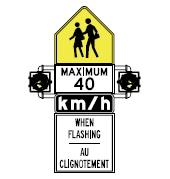
When this fluorescent yellow pentagon is visible with an image of children walking, drivers enter a school zone. You must slow down and drive cautiously while looking for children crossing the road. The speed limit may be lowered during regular school hours (as shown on the right sign) and is typically 30-40 km/h between 8 AM and 5 PM, Monday through Friday, unless otherwise stated. Please keep an eye out for flashing lights and slow down as needed.
Penalties for Failing to Follow School Zone Speed Limits
Speeding in school and construction zones results in higher fines, ranging from $90 to $600, depending on the speed. Demerit points will also be assessed based on this.
7. Railway Crossing Sign (Warning Sign)
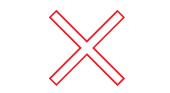
This white X with red borders is a railway crossing sign. This sign is usually found near railway tracks and warns drivers that the road ahead intersects with the railway tracks. When you see this sign and the lights are flashing, prepare to stop, even if you don’t see an oncoming train. When you see these signs without flashing lights, proceed cautiously. Slow down and look both ways before driving through. Additionally, all school buses will stop at railway crossings, so prepare to stop if you’re behind them.
Penalties for Failing to Stop at a Railway Crossing
If you fail to stop at a railway crossing, you may face fines of $110 to $150 and three demerit points. Additionally, you risk your life and the lives of others by crossing when you aren’t supposed to.
8. Merge Sign (Warning Sign)

This yellow diamond with merging arrows indicates that lanes are merging ahead. To integrate successfully, use the zipper merge technique to ensure smoother traffic flow (see video below).
Penalties for Failure to Merge
The penalties for Failure to Merge are similar, if not the same, as Failure to Yield (see above).
9. Directional Signs (Guide and Information Signs)

Directional signs, or road signs, are typically green with white text. You may recognize them as highway exit signs or route information signs.
10. Construction Zone Signs (Temporary Signs)
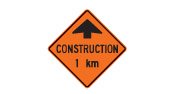
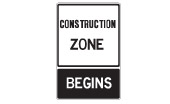
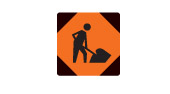
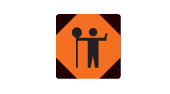
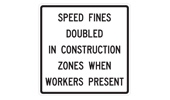
Construction Zone Road signs will typically be orange with black text or symbols. They warn drivers of road work and potential hazards.
When you see the first sign, road work is approaching one kilometre ahead. If the third sign is present, road work is ahead; the fourth sign indicates that someone controls traffic up ahead within the construction area. In this case, please drive slowly and await their instructions on when to pass. The last sign is a reminder that speeding fines will be doubled in construction zones when workers are present.
Other road sign mentions:
HOV Lane Road Signs
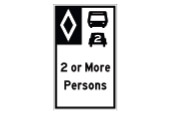
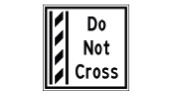
You will see these signs beside the HOV lanes. HOV stands for High Occupancy Vehicles and applies mainly to public vehicles, such as buses or other passenger vehicles. No vehicle carrying fewer passengers than the stated number is allowed to use this lane, and regardless of eligibility, it cannot enter the HOV lane when the solid line appears, as indicated by the sign on the right.
Do Not Enter Sign
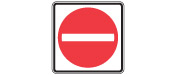
When you see this sign, it means do not enter this road.
Turning Signs and Signals
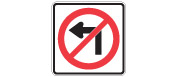
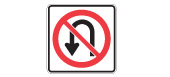
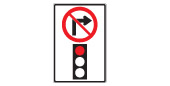
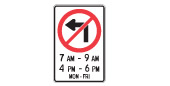
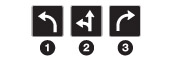
When you see the first road sign, No left turn is permitted at the intersection you approached. The second sign means U-turns (turns in the opposite direction) are not allowed. The third means no right-hand turns on a red light are permitted, so you must wait for the green light. Sign number four means that no left-hand turns are allowed during the stated dates and times. The last sign with numbers directs drivers in their respective lanes to follow the indicated direction. For example, drivers in the first lane must turn left, while drivers in the second lane may turn left or go straight. Drivers in the third lane can turn right only.
One-Way Street Sign

This sign indicates that traffic is flowing in one direction only, a standard feature on downtown streets.
Legal Consequences of Ignoring Road Signs
Failing to adhere to road signs can result in penalties:
- Fines range from $85 to $500, depending on the violation.
- Demerit points will be added to your driving record.
- Increased insurance premiums.
- Potential license suspension for repeat offences.
Bundle All of Your Policies for Maximum Savings!
Speak with an isure broker to find out how.
How to Improve Road Sign Awareness
- Practice regularly: Use online tests to refresh your knowledge, no matter your driver’s license level.
- Stay current: Road rules may change over the years, so review driving regulations periodically, especially in your neighbourhood and nearby cities.
- Pay attention to new signs: New signs are introduced to improve road safety and traffic flow. They will typically be marked with the word ‘New!’
Conclusion
Understanding and following road signs is essential for safe and lawful driving. Whether you are a new driver preparing for a test or an experienced driver needing a refresher, keeping your knowledge o up to date ensures a safer driving experience for everyone.
For more information on road signs, visit ontario.ca. As always, if you have any questions or concerns regarding your auto policy, contact one of our isure brokers today!

Confused about construction zone signs and speed limits in Ontario? Read more

New to Ontario and not sure of basic driving rules? Read more

Getting your licence is an exciting part of any person's Read more