

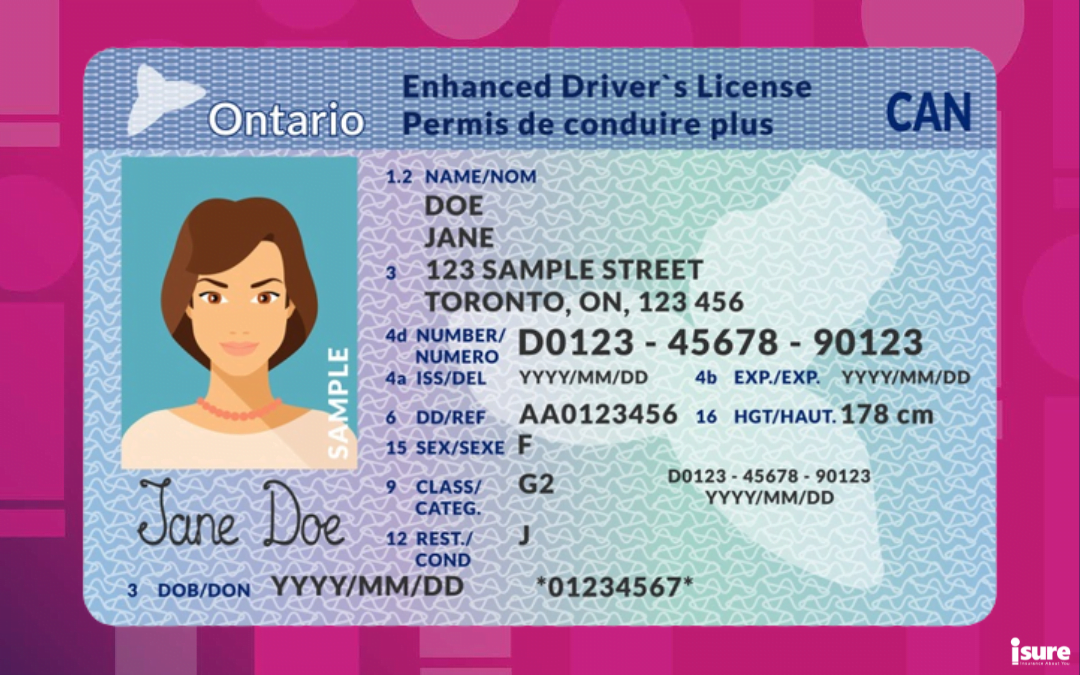
You might remember hearing about the Enhanced Driver’s Licence (EDL) a few years ago. It was a special type of driver’s licence that also served as proof of Canadian citizenship for border crossings into the United States. The bonus? It allowed crossing without requiring a passport for land or water travel. But in Ontario, the program is no longer available. If you’re wondering more about the topic, here’s what you need to know.
What Was an Enhanced Driver’s Licence?
An EDL was essentially a regular Ontario driver’s licence with extra “enhanced” features. Its main perk? You could drive across the US border by car or boat without carrying a passport, as long as you stayed in approved border lanes.
It was designed to comply with the Western Hemisphere Travel Initiative, a set of rules intended to make border crossings safer and more secure. The licence included proof of citizenship in a secure format, which meant less paperwork and faster processing at specific border points.
However, it wasn’t a complete replacement for a passport. Flying internationally still required a passport, and the EDL couldn’t be used for air travel.
Eligibility for EDL
Ontario made the EDL available to a relatively small group of drivers. To qualify, you had to:
- Be a Canadian citizen
- Be a resident of Ontario
- Hold a valid Ontario driver’s licence
- Pay an additional fee above the standard licence cost
While the EDL was convenient for border crossings, uptake was modest. By the time the program ended, around 60,000 Ontario drivers held an EDL — just a small fraction of the province’s 10 million licensed drivers.
Why the Enhanced Driver’s License Program Ended
Provinces cited several factors for ending the EDL program:
- Low uptake and budget deficits: The program never reached the anticipated popularity in some provinces. For example, British Columbia’s program consistently ran a deficit.
- Cost-saving measures: In Ontario, ending the program was a government initiative to save on administrative costs.
- Other travel options: Other, more convenient, and widely used travel documents became available. These include simplified 10-year Canadian passports and the NEXUS card, which is popular with frequent border crossers and also works for air travel.
- COVID-19 pandemic: The pandemic-related border restrictions and suspension of applications in 2020 contributed to the decline of the program. Some provinces used the suspension as an excuse not to resume issuing new cards.
- Privacy concerns: In the United States, states like California vetoed the implementation of EDLs over privacy concerns related to the radio-frequency identification (RFID) chips in the cards. While the Canadian program utilized similar technology, the general rise in privacy awareness was a contributing factor to the decline in the cards’ popularity.
What Happened After the Program Ended?
For drivers who already had an EDL:
- Existing licences remained valid until their expected expiry date.
- Renewals or replacements are no longer available; after expiry, holders must switch to a regular Ontario driver’s licence.
- Lost or stolen licences must be replaced with a standard licence, not an EDL.
The message was clear: if you had an EDL, you could keep using it for land or water border crossings — but eventually, everyone would transition back to the standard licence and other travel documents.
What This Means for Ontario Drivers Today
Although the EDL program is no longer in effect, crossing the border remains straightforward if you plan. Current options include:
- Passport – the most universal and widely accepted document.
- NEXUS card – ideal for frequent travellers who want faster processing.
- FAST card – designed for commercial drivers making regular trips to the US.
While the program would generate approximately $182,000 in annual revenue, eliminating the EDL resulted in a savings of about $100,000 in administration costs for the province eliminating the EDL saved the province about $100,000 in administration costs. Other available options, such as NEXUS, FAST, and ePassport, are available for border crossing documents and can also be used for air travel. The Ontario government hoped to make life easier for people and businesses in the province by delivering simpler, faster, and better government services. Overall, the EDL offered convenience to a small group of Ontario drivers, but for most travellers, passports and other secure programs are more practical.
Final Thoughts
The Enhanced Driver’s Licence may no longer be an option in Ontario, but that doesn’t mean navigating border-crossing rules and travel documents has to be confusing. Whether you’re wondering which ID works best for your situation, or how travel plans might affect your insurance coverage, an isure representative can help. Our team is here to answer your questions and guide you toward the right solutions so you can travel with confidence and peace of mind.
In Ontario, you’re required by law to update your driver’s Read more

Renewing an expired driver’s licence in Ontario may feel overwhelming, Read more

Renewing a commercial driver’s licence in Ontario isn’t as simple Read more