
Some of the most critical areas to drive safely in are school zones. And now that school is in-person again, it’s more important than ever to be cautious and aware when approaching these areas. We break down everything you need to know about school zone signs and speed limits in Ontario.
What Is a School Zone?
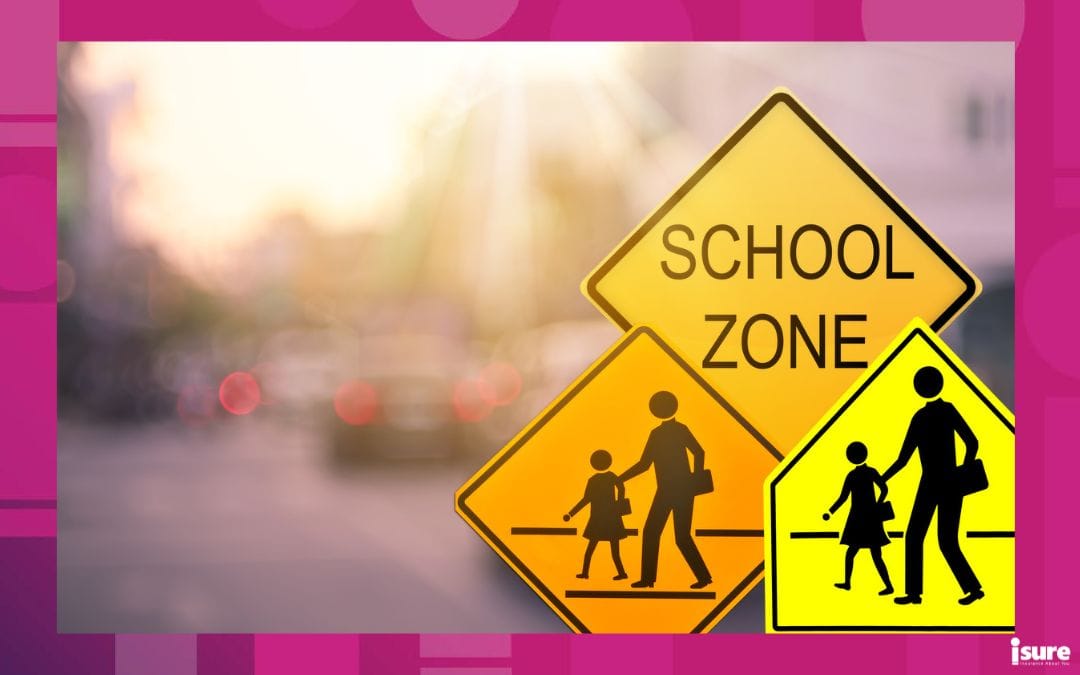
You will know you are entering a school zone when you see a fluorescent yellow sign featuring two pedestrians crossing.
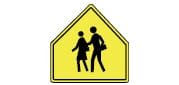
If you do happen to come across one of these signs, you should automatically slow your vehicle, drive with extra caution, and watch for children.
What is the Speed Limit in a School Zone?
When driving in a school zone, the most important thing to remember is to follow the speed limit. In Ontario, the speed limit in these areas ranges from 30 km/h to 40 km/h. There will be signs surrounding the school zone to remind you. However, if you’ve been driving at a speed of less than 50 km/h and have to slow down to 30 km/h, having these numbers memorized is the easiest way to avoid a collision or accident. Additionally, in Ontario, school zones are monitored by Automated Speed Enforcement (ASE) cameras. These use a camera and a speed measurement device to monitor the speeds of vehicles in the area.
Always Yield to Pedestrians
Following the speed limit will also help with yielding to pedestrians, another vital rule to remember when driving in a school zone. With children outside playing, school buses dropping off children, or cars parked by faculty and staff, there are many hazards to be aware of. Following the speed limit will alleviate stress and reduce the chance of collision in these areas, keeping everyone safe.
What is the Penalty for Disobeying School Zone Signs?
There are also substantial fines for speeding in school zones that you should be aware of. If you are speeding 10 km/h over the limit, you will be fined $95. 20 km/h over the limit incurs a $180 fine and three demerit points, 30 km/h over the limit results in a $450 fine and four demerit points, and 40 km/h over the limit results in a $595 fine and four demerit points. These speeding tickets can also affect your car insurance rates, with the increase depending on the severity of the infraction. For example, one ticket could affect your premium for at least three years!
When Should You Stop for a School Bus?
Ontario drivers are subject to strict laws around school zones and buses. Here are some general rules to keep in mind when driving:
- On the road WITHOUT a median strip, drivers travelling in both directions must stop for a school bus stopped when both its upper red lights and stop sign are flashing. When stopped, drivers travelling in the opposite direction are required to stop at a safe distance for students to cross the road, as determined by the driver.
- When a road has a median strip, only vehicles following the bus are required to stop at the median strip.
- If you are stopping behind a bus, you must allow a minimum of 20 meters of space from the rear of the bus.
- Drivers must stop for a school bus at any time, not just during school hours.
Obey School Crossing Guards
Many school zones have crossing guards at crosswalks. Ontario drivers are required to obey a crossing guard’s instructions to stop. When a guard displays a stop sign, you MUST remain stopped until everyone, including the guard, is safely off the roadway.
Seasonal Conditions Play a Role
It is essential to remember that during different seasons, other seasonal considerations come into play. For example, be aware of lower visibility and more slippery roads when driving in a school zone, particularly in fall/winter. Additionally, during seasons like spring, there may be more children walking or biking in the area, so it is crucial to remain vigilant and keep an eye out for school zone signs. Therefore, when driving through school zones, keep in mind not only the speed limit but also the seasonal driving conditions.
Popular School Zone Signs to Look For
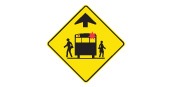
This sign warns you that you are coming to a hidden school bus stop. Slow down, drive with extra caution, and watch for children and a school bus with flashing red lights.
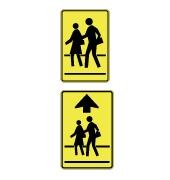
These signs warn of a school crossing. Watch for children and follow the directions of the crossing guard or school safety patroller.
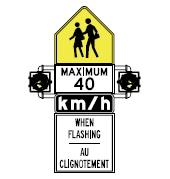
The speed limit in this zone is lower during school hours. Observe the speed limit shown when the yellow lights are flashing.
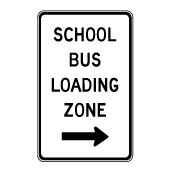
Marks a zone within which school buses load or unload passengers without using the red alternating lights and stop arm.
Stop for the school bus when the signals are flashing.
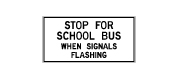
This sign is installed on multi-lane highways with no centre median divider. It informs drivers approaching from both directions that they must stop for a school bus when its signal lights are flashing.
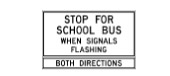
All sign photos and descriptions, courtesy of ontario.ca.
We hope this article helps you understand the key information you need to know about school zone signs and speed limits in Ontario. Happy, safe driving!

Confused about construction zone signs and speed limits in Ontario? Read more

New to Ontario and not sure of basic driving rules? Read more
As of the end of last year, the number of Read more