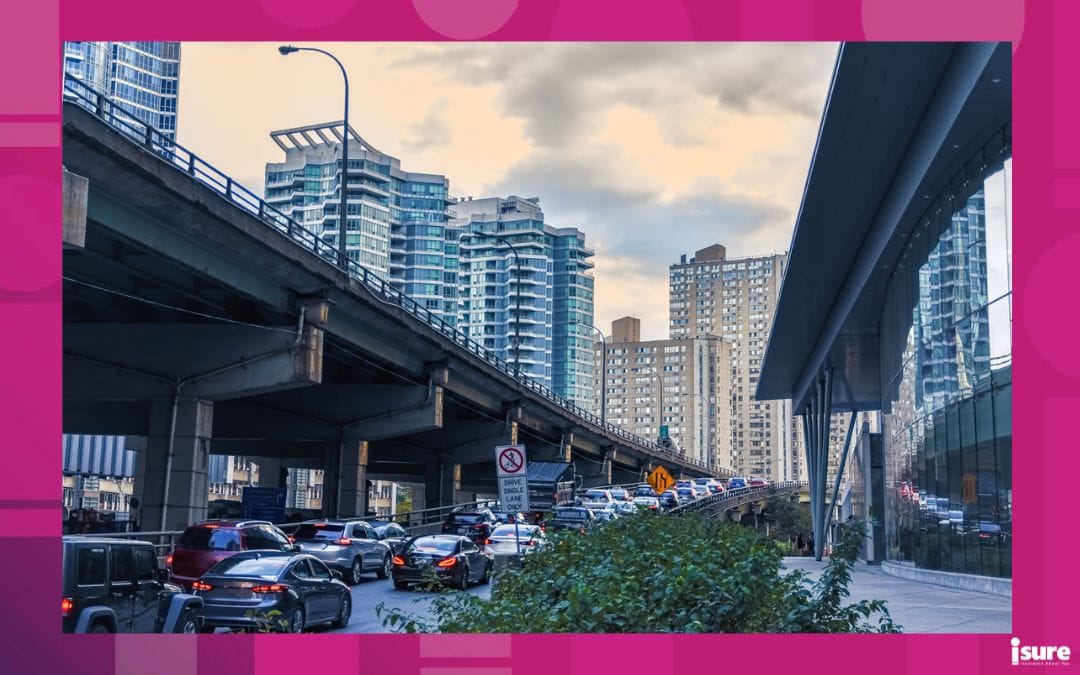
If you drive in Ontario—or any busy region—chances are you’ve found yourself stuck in stop-and-go traffic more often than you’d like. Whether it’s a quick slowdown on the way to the next highway exit or a two-hour crawl during your daily commute, this type of traffic can be more than just frustrating—it can take a serious toll on your vehicle over time.
At isure, we’re here to help you understand precisely how stop-and-go traffic impacts your car, and what you can do to protect it, your wallet, and your peace of mind. Let’s explore the causes, effects, and safe driving strategies to help you confidently navigate traffic.
What is Stop-and-Go Traffic?
Stop-and-go traffic is a common and frustrating experience for drivers across Ontario, especially in densely populated areas or along major highways. Stop-and-go traffic refers to the repeated starting and stopping of vehicles in congestion. One of the most frequent causes is rush hour traffic, when thousands of commuters hit the roads at the same time, overwhelming the infrastructure. Car accidents are another major contributor, as even minor collisions can lead to lane blockages, rubbernecking, and significant slowdowns. Highway driving often experiences stop-and-go patterns due to fluctuating traffic volumes and merging vehicles, particularly near on-ramps and off-ramps. Lane closures caused by road construction, maintenance, or emergency repairs can further disrupt traffic flow. This reduces road capacity and forces vehicles to merge into fewer lanes. Weather conditions, stalled vehicles, and special events can also play a role, making stop-and-go traffic a multifaceted issue that challenges both urban and rural drivers alike.
In Canada, Toronto and Vancouver top the list of cities with the worst traffic congestion. According to traffic reports, Torontonians spend nearly 200 hours per year sitting in traffic!
How Stop-and-Go Traffic Damages Your Vehicle
If you find yourself in stop-and-go traffic daily, you may wonder how much it affects your car. Unfortunately, stop-and-go traffic does take a toll on your vehicle; let’s take a look at how:
1. Wears Out Your Brakes Faster
The more you use your brakes, the faster they will wear out. When you’re stuck in stop-and-go traffic, you’ll be constantly using your brakes. This causes brake pads and rotors to wear more quickly than usual. Even more so, if you accelerate quickly and then slam your brakes down, which many people do, your brakes can overheat. This can warp the rotors and glaze your brake pads, causing damage. Additionally, it may decrease your stopping power, which is super dangerous.
Pro tip: To reduce wear, maintain a safe following distance and apply your brakes gently.
2. Increases Fuel Consumption
Stop-and-go traffic means your engine is constantly working harder. Idling and constant acceleration use more gas than cruising at a steady speed.
- City driving has a lower fuel efficiency rating (km/hr) than highway driving.
- Idling = 0 km/hr. No fuel savings happen while sitting still.
You’ll end up filling your tank more often—and paying more—especially with rising gas prices.
3. Shortens the Life of Engine Oil and Filters
In addition to your car’s coolant, stop-and-go traffic can actually affect your engine’s oil. Extended idling paired with frequent acceleration in heavy traffic can lead to an increased fuel dilution in your oil. In most vehicles’ owner’s manuals, the manufacturer will typically shorten the interval between engine oil changes if you are consistently enduring stop-and-go traffic during your commute.
Why? Dust, dirt, and long idle times can clog air filters and degrade engine oil quality faster than under normal driving conditions.
4. Stresses the Cooling System
When you’re stuck in stop-and-go traffic, your car’s engine and cooling system may struggle to maintain optimal temperatures. This is caused by a lack of airflow across the radiator, thus reducing the cooling system’s ability to remove heat from the coolant. When this occurs, you risk:
- Overheating
- Increased wear on the radiator and fan system
- Long-term engine damage if not addressed
This can result in potentially long-term engine damage, especially if your vehicle already has cooling fan issues. Make sure your coolant levels are checked regularly and that your cooling fans are functioning properly.
5. Puts Pressure on the Transmission
Automatic transmissions in stop-and-go traffic are constantly shifting between first and second gears, which increases wear and tear on internal components.
This can lead to:
- Transmission fluid breakdown
- Overheating
- Higher risk of failure over time
How to Prepare for Stop-and-Go Traffic
Preparing for stop-and-go traffic is critical when it comes to the longevity of your vehicle. While traffic can’t always be avoided, here are some proactive steps to minimize its impact on your car and ensure your safety:
1. Maintain a Steady Speed
Try to maintain a constant, steady speed when driving, and do your best to slam your brakes as little as possible. Smooth, gradual acceleration and braking:
- Reduces brake wear
- Saves fuel
- Lowers stress on your engine and transmission
2. Turn Off Unnecessary Electronics
When you’re stuck in stop-and-go traffic, you may feel the need to run the air conditioning, seat warmers or rear defrosters that require large electrical demands. Unfortunately, this might not be the best move for your vehicle as it can add further stress to your battery and alternator.
Quick tip: Crack a window or use the vent fan instead of max AC if you’re not moving.
3. Maintain Focus on the Road
Even in traffic, this is the number one rule when it comes to driving. When you can predict traffic movements, you can adjust your driving style accordingly by:
- Keeping your eyes ahead
- Anticipating slowdowns
- Maintaining a safe distance from the vehicle in front
This helps prevent rear-end collisions and keeps traffic flowing more efficiently.
4. Practice Patience
Take a deep breath: Let’s face it, traffic is stressful. This is especially the case if you’re running late. Take a deep breath, stay calm and try to minimize any road rage that you may be feeling. When you become aggressive, so does your driving. This can be dangerous for you, your vehicle and other drivers.Stress and frustration can lead to aggressive driving—a major contributor to accidents in traffic. Listen to calming music or a podcast, take deep breaths, and remind yourself that getting there safely is the top priority.
5. Stay Up-to-Date on Vehicle Maintenance
Follow your vehicle’s maintenance schedule more closely if you drive in heavy traffic often. Key areas to monitor:
- Brake pads and rotors
- Engine oil and filters
- Coolant and transmission fluids
- Tire pressure and tread wear
Bonus Tips: Avoiding Stop-and-Go Traffic When Possible
You can’t always dodge traffic, but here are a few smart ways to limit exposure:
- Use traffic apps like Waze or Google Maps to reroute around congestion
- Try carpooling to reduce the number of vehicles on the road
- Adjust your commute time (earlier or later) to avoid peak hours
- Opt for public transit when possible
Does Stop-and-Go Traffic Affect Car Insurance?
While sitting in traffic itself won’t raise your car insurance premiums, claims caused by traffic accidents will. Traffic-related risks include:
- Rear-end collisions
- Fender benders
- Road rage incidents
- Unexpected damage from nearby vehicles
Having the right auto insurance coverage in Ontario ensures you’re protected if something goes wrong.
Final Thoughts: Stay Calm, Stay Covered
Stop-and-go traffic is unavoidable in today’s driving landscape, especially in busy urban centres. But with the right driving habits, proactive maintenance, and proper insurance coverage, you can reduce its impact on both your vehicle and your peace of mind.
At isure, we’re committed to keeping you protected on every commute. If you’re shopping for car insurance in Ontario or want to make sure your current policy fits your driving habits, we’re here to help.
Millions of people use our roads every single day. As Read more

One common question people ask about is whether driving tickets Read more
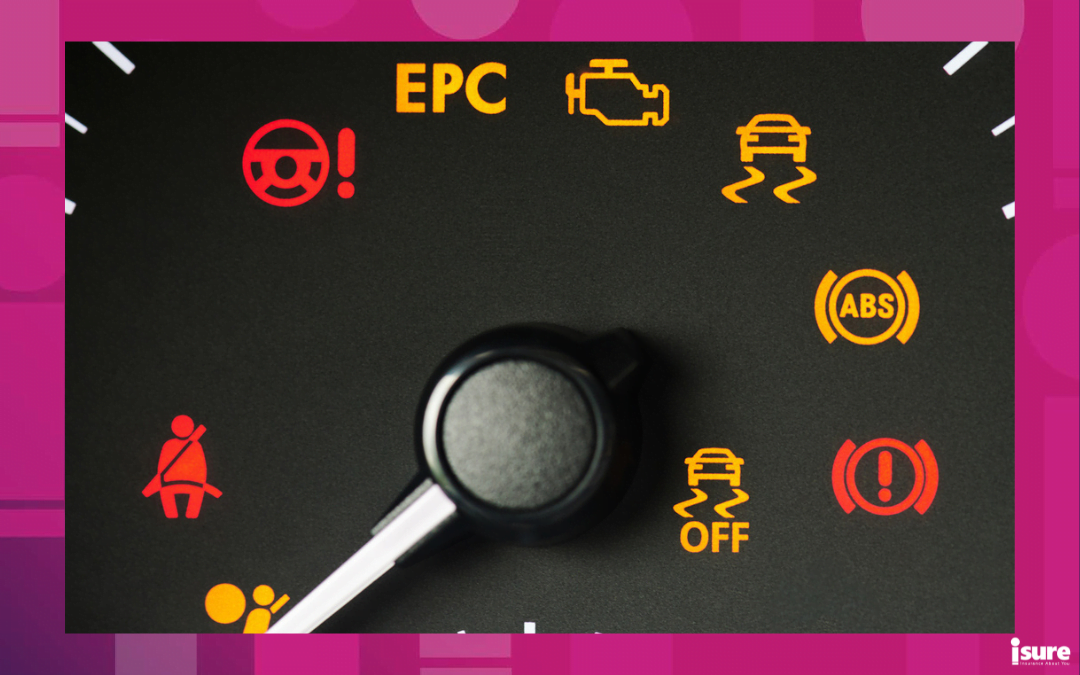
Here are some of the most important car maintenance lights Read more