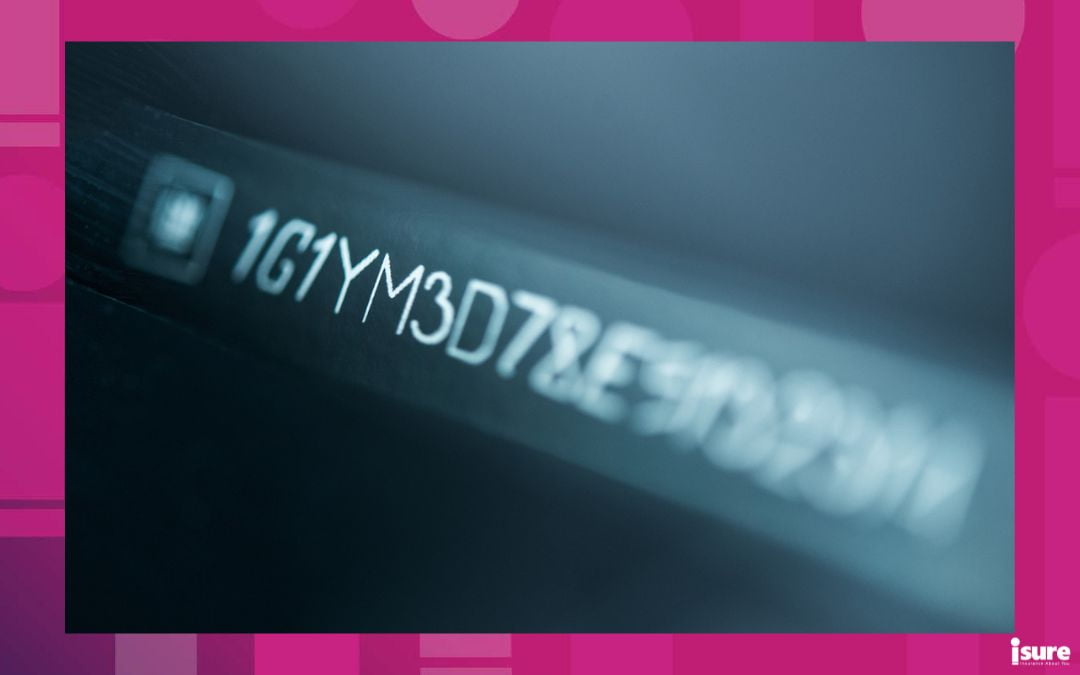
If you are in the market for a used vehicle, you may have more than accurate mileage readings to concern yourself with. There’s a chance that the used vehicle you’ve been eyeing online may be stolen. Car thieves have been exploiting a weakness in vehicle registrations. As a result, Canada’s auto insurers are calling on the federal and provincial governments to tighten loopholes allowing car thieves to give stolen cars a new Vehicle Identification Number (VIN). As a result, they sell them to unsuspecting customers. In fact, it is estimated that nearly 1/3 of stolen vehicles have now been title-washed and resold. Read on to learn more about how thieves are re-VINing vehicles.
Why Criminals Are Targeting Vehicles
The idea that car theft is spontaneous couldn’t be further from the truth. Car thieves do not steal vehicles at random; they are usually highly organized and, in many cases, have links to crime rings. When determining insurance premiums, how often your make and model are stolen is one of the factors insurers consider. Unlike the high-demand vehicles that are regularly sent overseas, some stolen vehicles are kept in Ontario. Thieves give these vehicles a false VIN and then sell them to unsuspecting consumers here in Ontario. Some thieves are smart enough to fool you into believing you are legitimately purchasing a vehicle.
Over a Billion Dollars in Stolen Vehicle Claims
According to the Insurance Bureau of Canada (IBC), insurance companies in 2023 were on the hook for more than $1.5 billion in claims to replace stolen vehicles. This marks the second consecutive year auto theft claims cross the $1-billion mark. The 2023 number is a 254 percent increase from the nearly $440 million in 2018. Although the fight against Canada’s worst-ever auto theft epidemic has largely been focusing on ramping up inspections at shipping ports, criminals are adapting, police say. They are increasingly selling hot vehicles in Canada to unsuspecting buyers with little protection. Auto insurers claim it is exploiting a weakness in provincial registration systems that veteran investigators argue needs fixing. “The market is so lucrative, it’s easy cash,” says Det. Sgt. Greg O’Connor of Peel Regional Police, west of Toronto.
While it is impossible to know what criminals do with all stolen cars, police now estimate nearly one-third of stolen vehicles are being resold in Canada. This marks a significant increase from just six months ago when the vast majority of vehicles are believed to be exported.
What is a VIN?
The car’s Vehicle Identification Number (VIN) is the identifying code for a specific automobile. The VIN serves as the car’s fingerprint, as no two vehicles in operation have the same VIN. A VIN acts as a unique identifier for the vehicle. A VIN displays the car’s unique features, specifications, and manufacturer. Thieves can use the VIN to track recalls, registrations, warranty claims, theft, and insurance coverage.
But criminals are replacing the VIN plate, often with ones from vehicles that are legally exported, or registered in another province. They may go through junkyards, export records or simply walk through a mall parking lot to find VINs to clone. In doing so, they are “washing” the vehicle of their stolen status, or re-VINing vehicles.
How can two cars with the same VIN be registered?
Provincial centres that administer vehicle registration do not have a system that checks if VINs already exist in other jurisdictions. “You can have a vehicle registered in one province and the same VIN on a different vehicle registered in another and we need to stop that,” David Adams, President and CEO of Global Automakers of Canada, tells a recent auto theft summit in the Greater Toronto Area. Neither Canada nor the United States has a national vehicle registry.
Canada’s Auto Insurers
In calling for a crackdown on re-VINing vehicles, Canada’s auto insurers gave a shout-out to all levels of the Canadian government for cracking down. Some insurers report that the preliminary measures taken have had some influence on lowering auto theft numbers. “However, the focus to date has largely been on preventing stolen vehicles from exiting the country,” says Hanna Beydoun, Manager of Policy at IBC, in an article on IBC’s website Thursday. “While important, halting the export of stolen vehicles cannot be the sole focus. A growing number of vehicles are stolen, rebranded, and sold to unsuspecting customers here in Canada through a practice known as ‘ReVINing.’”
Unlawful Possession of the Vehicle
If you are thinking of buying a used vehicle, it is important to carry out your due diligence. Be sure to investigate the dealership before agreeing to any purchases. “Potential buyers should be aware of the risks with inadvertently purchasing a re-VINed vehicle,” Guardsman Insurance explains. Guardsman Insurance warns consumers on its website of the issues involving re-VINing. “Possession of stolen property can lead to the lawful seizure of the vehicle by law enforcement, financial loss for the buyer, and potential denial of insurance claims. Knowingly purchasing a stolen vehicle may result in criminal charges.”
Auto theft also “drives up the cost of auto insurance for everyone,” IBC says. “In Ontario alone, auto theft added an extra $130 to drivers’ insurance premiums” on average. The IBC advises that, as a potential car buyer, you should examine the VIN on the dashboard. It is also important to check the pillar between the front and back driver’s side doors. If you see the numbering bubbling, it is a sign that there may be a sticker on top of the real VIN.
How to stop the practice of Re-VINing vehicles
Due to the re-VINing issue, the IBC is calling on the federal government to establish a National VIN Registry to promote seamless information-sharing between provincial VIN registries. “Provincial centres that administer vehicle registration, such as Service Ontario, do not have a system that checks if a VIN already exists in other jurisdictions,” IBC explains. “This means a vehicle can be registered in one province with the same VIN as a vehicle registered in a different province. This loophole enables criminals to register stolen vehicles with a duplicated VIN, making it difficult to track and identify stolen cars across provincial borders.”
VIN-verifying
Fraudsters often sell vehicles that are deemed non-repairable by the Insurance Bureau of Canada. This is generally due to a vehicle being damaged in an event such as a fire, flood or collision. When a vehicle is deemed non-repairable, it can never be registered for operation on any Canadian road. Luckily, a vehicle VIN Verification service is available from the IBC to check whether a vehicle has been reported as non-repairable. Simply obtain your vehicle’s VIN number and enter it into their VIN Verifyer.
Closing Loopholes Exposing Canadians to Re-VINing
In the federal government’s National Action Plan on Combatting Auto Theft, released May 2024, the feds urge the provinces to make “investments to enable comprehensive data sharing across jurisdictions through the existing Interprovincial Record Exchange (IRE).” IBC is also calling on provinces to close other procedural loopholes exposing Canadians to re-VINing such as:
Eliminate public access to RINs
A Registered Identification Number (RIN) is a unique number assigned to each vehicle owner in Ontario. It tracks the vehicles they own presently or in the past. Currently, members of the public (including car thieves) can purchase a RIN history for a small fee. Shutting down public access to RINs will prevent criminals from easily obtaining vehicle information.
Third-party registration allows someone other than the vehicle owner to complete the registration process on the owner’s behalf. Restricting third-party authorization to individuals with power of attorney can reduce the number of fraudulent registrations.
Restrict the use of NVIS forms to licensed car dealers
Auto manufacturers produce forms known as New Vehicle Information Statements (NVIS) to register new vehicles for the first time. These forms are being forged and used to register vehicles with older model years. The IBC recommends restricting their use to dealers.
Consumers Taking Action Against Re-VINing
On a consumer level, brokers advise clients shopping for cars to check their prospective new vehicle’s information against CarFax reports. The CarFax report information should match the seller’s information. Red flags to look for include:
- A vehicle that records show is being declared salvage after a crash later reappearing without damages.
- A VIN with a sales and registration history almost exclusively in one province or state suddenly being for sale in another.
Insurers suggest that car buyers have the seller provide a Used Vehicle Information Package (UVIP) from the Ministry of Transportation (MTO). This package, by law, contains essential information. This includes vehicle details, registration history, lien status, Retail Sales Tax (RST) details, and the bill of sale.
The first half of 2024 saw a lowering in auto theft. However, there is still a long way to go before the problem is under control. By 2023, more than $1 billion worth of vehicles was lost in just Ontario alone. According to the Équité Association, the national organization charged with reducing insurance fraud, auto theft is still one of the top three revenue generators for organized crime. In short, high reward, low risk. Re-VINing vehicles is a lucrative crime that is growing in Canada. If you are considering purchasing a used vehicle and need insurance, speak with an isure representative first.

The debate on whether you should buy a new or Read more

Stressed about buying a used vehicle? We've compiled a list Read more
Canada's auto theft crisis appears to be reversing course. Following Read more