
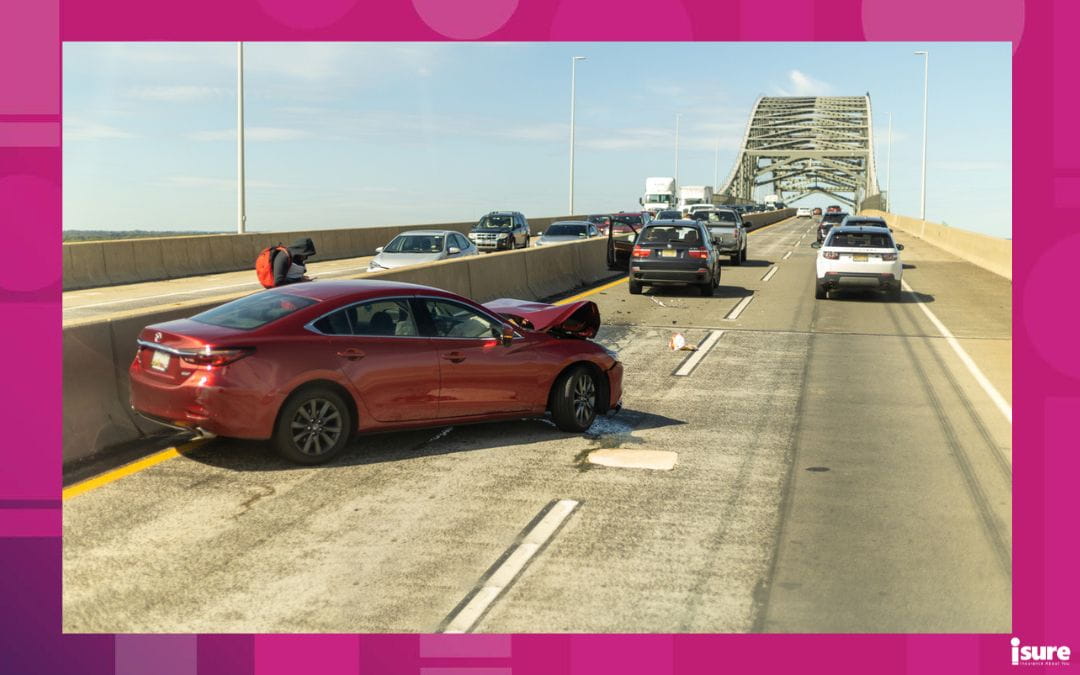
It is no surprise that fraud has become a growing problem across Canada, particularly in the auto industry. Every day, insurance companies continue to develop methods to combat driver fraud. Unfortunately, at the same time, people with unsavoury intentions continue to come up with new ways to commit it. Nowadays, staged collision schemes have emerged as a major issue for Canadian auto insurance loss ratios. We examine how staged collisions are affecting the Canadian auto insurance industry.
Understanding Staged Collisions
What Is A Staged Collision?
A staged collision is a deliberate car accident committed by fraudsters to file a false insurance claim. These schemes often involve multiple people who stage accidents to make them appear legitimate, allowing insurers to pay out for damages, injuries, and other costs.
Why Are Staged Collisions Increasing In Canada?
Staged collisions are on the rise due to organized fraud networks, economic pressures, and tactics that are becoming harder to detect. According to reports, incidents have increased as much as 400% a year. Thus, staged collisions are becoming a growing concern for both insurers and drivers.
Where Are Staged Collisions Most Common In Canada?
Staged collisions have been mainly reported in the Greater Toronto Area, yet have extended to other provinces as well. Common cities include:
- Toronto
- Brampton
- Mississauga
- Hamilton
- Ottawa
- Markham
- Calgary
- Halifax
How Do Staged Collisions Affect My Premiums?
Insurance fraud generally increases insurers’ costs. These costs will often be passed on to consumers through higher premiums. In the end, honest drivers end up paying more.
Staged Collisions Up 400% In Canada
According to an article from CP24, there has been a 400% year-over-year increase in staged collision incidents between 2024 and 2025, and 2026 shows no signs of slowing down.
The recent surge in staged collisions suggests this type of fraud is becoming a prominent issue for insurers, not just a marginal cost, Driving columnist Lorraine Summerfeld told Insurance Business Mag.
According to Aviva, claims of staged collisions are affecting multiple parts of insurance losses. This includes physical damage, bodily injury, and legal expenses and costs associated with handling claims. Sommerfeld noted that, unlike single-event catastrophes, this type of fraud is “structurally embedded in the book.”
This trend comes as the wider Property and Casualty sector faces record-breaking losses. An analysis showed that insured losses from natural disasters in Canada surpassed $6 billion in 2024, nearly three times the level in 2023. Major flooding in cities such as Toronto greatly contributed to these numbers.
Drive with Confidence
Request your free car insurance quote now and get the coverage you deserve.


Staged Collisions Going Beyond Simple “Fender-Benders”
More recently, these staged collisions are going beyond your simple “fender bender” accident fraud. Sommerfield pointed to recurring patterns such as multi-vehicle “swoop and squats”, parking-lot “waveout” incidents and high-speed staged crashes on major highways.
The swoop-and-squat scenario has been particularly common. This is where a vehicle cuts in front of another and suddenly brakes. This forces the innocent third vehicle to rear-end the car in front. In some cases, accomplices may even go to the length of blocking escape routes.
Wave-out scams, on the other hand, are much simpler. They involve a driver being signalled out of a parking space or junction and then struck by the signalling vehicle. Afterwards, the driver of the signalling vehicle will deny any responsibility. At the end of the day, these tactics may lead to claims for alleged injuries, rehabilitation, lost income, and a host of other costs. In total, this pushes up the severity.
Greater Toronto Area: A Hot Spot
According to Aviva, hot spots for these staged collisions have been traditionally associated with parts of the Greater Toronto Area. In many cases, these are occurring in cities where insurance is already expensive. These cities include Toronto, Brampton, Mississauga and Hamilton. Aviva, as well as other market observers, also reported similar patterns emerging in cities such as Ottawa, Markham, Calgary and Halifax.
According to Sommerfeld, this broader geographic spread challenges some of the long-standing rating and segmentation practices that generally would rely on territory, vehicle type and driver profile. She also stated that, in general, fraud tends to occur through specific referral channels, repairers, tow operators, and legal intermediaries, not just postal codes. When insurers fail to account for these behavioural factors in pricing or underwriting, better risks often end up subsidizing worse ones in the same region. Sommerfeld added that regional underwriting claims and strategies must adjust to this type of fraud quickly when indicators move into new cities, rather than waiting several renewal cycles.
How Can Dashcam Footage Help Prove a Staged Collision?
In many cases, dashcam footage and telematics can be the deciding factor in identifying staged collision fraud. One particular case of staged collision fraud in Queens, New York, became particularly high-profile in late 2024. It showed how dashcam footage can be a deciding factor in proving a collision was staged. According to Sommerfeld, charges in this case only ended up being laid because the victim’s camera captured the entire event.
With this in mind, insurers are wondering how heavily they must lean on external data to distinguish real accidents from staged ones. Sommerfeld suggested normalizing the use of dashcams and telematics in personal auto portfolios through incentives. This approach replaces mandates and rewards drivers who provide high‑quality footage of incidents as they occur.
Staged Collisions And Public Concern
Earlier this year, Aviva staged a poll asking the public about fraud and the recent uptick in premiums. This poll showed that 60% of Canadians are concerned about fraud contributing to higher premiums. It also showed that 43% believe that the current criminal penalties for insurance fraud are not strong enough. Industry experts are looking at this as an opportunity to engage with policyholders on the link between fraud, behaviour and pricing.
Aviva and Équité Association both noticed one worrying development when it came to the rise in staged collisions. This was the rise of staged collisions, which involved large numbers of willing participants. In many cases, when it comes to these schemes, financially stressed vehicle owners will agree to hand their keys over to fraudsters who can stage these high-impact collisions. These are generally done on busy highways in return for a share of the proceeds.
When cases such as this occur, it raises new questions surrounding moral hazard and trust in underwriting. It also increases the risk of third-party injury and large, multi-vehicle claims. To add to this, heavily impacts public resources, such as police, fire and emergency medical services. All in all, these staged collisions are a broader safety concern rather than just an insurance issue.
Bundle All of Your Policies for Maximum Savings!
Speak with an isure broker to find out how.
The direction that the world of fraud is heading in shows that staged collisions are becoming more frequent. Due to this, Canadian auto insurers will face more pressure to integrate anti-fraud consideration. This would impact pricing, underwriting and claims. As a driver, it is your responsibility to always be on the lookout for drivers on the road who may have some unpleasant intentions up their sleeve.
Remember, if you’re in the market for insurance yourself or a loved one, don’t hesitate to call isure today!

When researching car insurance, finding the correct information can sometimes Read more

Being injured in a car accident is overwhelming, especially when Read more

A Hit and Run Accident is an accident where one of Read more