Canadian insurance companies have seen car insurance rates rise across the country, leaving many drivers asking: Why is my insurance going up — even with a clean driving record? Rate increases can be frustrating, especially when nothing about your driving habits has changed. To help provide clarity, this article breaks down the most common reasons car insurance premiums increase, explains who is responsible for approving rate changes, and outlines practical ways to reduce costs where possible.
Who Plays a Role in Setting Insurance Rates?
Several parties influence how auto insurance rates are set in Canada:
- Federal government: Oversees insurers’ financial stability to ensure they can pay future claims.
- Provincial regulators: Control how insurers assess risk, price policies, and manage claims.
- Provinces and territories: Determine which rating factors insurers are allowed to use and how those factors may be applied.
- Insurance companies: Develop rating rules based on risk data, which regulators must approve before being implemented.
In Ontario, insurers must receive approval from the Financial Services Regulatory Authority of Ontario before increasing auto insurance rates.
Reasons for Car Insurance Rate Increases
Many factors can lead to higher premiums at renewal. These generally fall into two categories: factors within your control and factors outside your control.
Factors That Impact Drive Record or Insurance History
(Generally within your control)
1. Traffic Tickets
Traffic convictions signal increased risk to insurers. While demerit points themselves do not directly raise insurance premiums, the convictions associated with them may be.
- Minor convictions (e.g., speeding): Can lead to moderate premium increases.
- Major convictions (e.g., distracted driving) often result in significant increases.
- Serious or criminal offences (e.g., impaired or stunt driving): May double premiums or require high-risk insurance
If a driver on your policy has a poor driving record, your overall premium may continue to rise. In Ontario, an Excluded Driver Endorsement (OPCF 28A) may reduce premiums by formally removing a high-risk driver from the policy.
Most traffic tickets carry demerit points. Demerit points DO NOT impact your insurance rates unless you have enough to merit a licence suspension.
2. At-Fault Accidents
At-fault accidents typically impact insurance premiums for several years. Even a partial fault may affect rates, depending on the insurer and the severity of the claim. It’s important to note the different types of at-fault accidents, as well. Insurers reward claims-free driving, so an at-fault accident resets that record and increases perceived risk.
3. Adding Drivers or Vehicles to Your Policy
Adding a new vehicle or driver can increase premiums, particularly when:
- The vehicle is newer or more expensive to repair.
- The driver is newly licensed or under age 25.
Secondary drivers generally cost less to insure than primary drivers, but they still influence overall risk.
The cost of including others may increase significantly when you add a teenager to your policy. However, the effect on your premium may not be much if the additional person has experience and a clean driving record. This might include an adult family member or friend.
4. Loss of Insurance Discounts
Accidents, convictions, or changes to your policy may cause you to lose discounts, such as:
- Claims-free discounts
- Conviction-free discounts
- Loyalty discounts
Switching insurers may also result in the loss of long-term customer discounts.
5. Distracted Driving
Distracted driving convictions are treated as major offences in Ontario and often result in:
- Substantial rate increases
- Policy non-renewal or cancellation
- Placement in the high-risk insurance market
Reducing distractions — such as using “Do Not Disturb While Driving” features — can help protect both safety and insurance costs.
6. Your Insurance Coverage Selections
The type and amount of coverage you choose directly affect your premium. Optional endorsements, such as OPCF 43 (Waiver of Depreciation), can be valuable on new vehicles but may become unnecessary as the vehicle ages.
Reviewing coverage regularly helps ensure you are not paying for protections you no longer need.
Factors that Impact Insurance Claim Costs Overall
(Generally outside of your control)
1. Car Insurance Fraud
While specific annual totals for all types of auto insurance fraud aren’t released annually, industry reporting indicates that insurance fraud — including staged accidents, inflated claims, and false documentation — remains a significant concern for Canadian insurers. One large insurer reported that fraud investigations grew significantly in 2024, with auto-related incidents accounting for roughly two-thirds of all detected claim fraud cases, and overall fraud investigations rising by about 76% year over year.
2. Inflation and Rising Repair Costs
When the cost of living puts pressure on the Canadian economy, it can also affect auto insurance premiums. Rising prices increase the cost of vehicle repairs, replacement parts, and labour — all of which insurers must factor into premiums. According to Statistics Canada, Canada’s Consumer Price Index (CPI) rose about 2.2% year-over-year in November 2025, reflecting overall inflation in the economy. Transport costs, including auto insurance and vehicle-related expenses, have also contributed to upward pressure on premiums as parts and services become more expensive.
Rather than short-term inflation spikes, insurers now price for long-term cost trends, which continue to affect premiums.
3. Higher Cost of Modern Vehicles
It used to be that a minor parking‑lot scrape could be fixed out of pocket without touching your deductible. Today, modern vehicles often have cameras, sensors, and advanced driver‑assistance systems (ADAS) built into the bumper, dramatically increasing repair costs. In 2025, a complete bumper replacement on a typical vehicle can range from about $800 up to $2,500 or more, depending on the complexity and model. Vehicles with integrated sensors or cameras — even mid‑range cars — can cost $1,200 to $3,500 or more to repair or replace, including parts and labour.
Today’s vehicles are equipped with advanced safety features, sensors, cameras, and electronics. While these improve safety, they significantly increase repair costs — even for minor collisions — resulting in higher claim payouts.
4. Claims Frequency in your Area
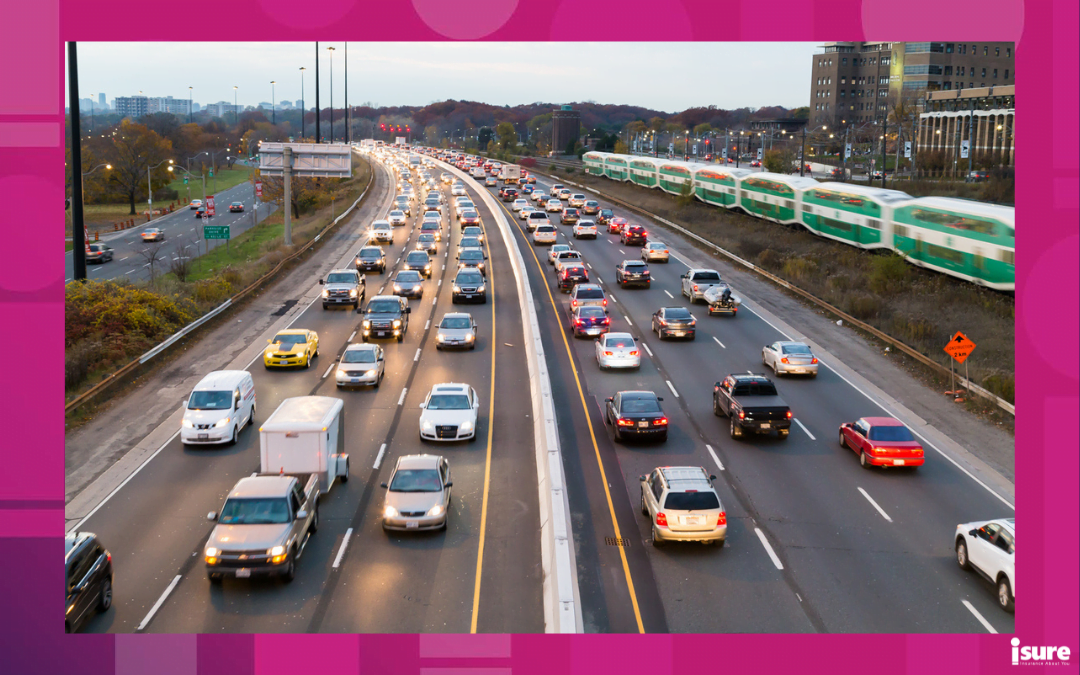
Your car insurance rate may increase depending on where you live. Certain areas may have higher weather-related claims, motor vehicle accidents, or auto theft, which can affect the price. Insurance companies need to charge their customers enough that they will be able to pay all claims that are made. So, as your risk of making a claim increases, so will the cost of your insurance. Your premium may increase if your insurance company’s analytics show that your area has become more prone to congestion or extreme weather events that lead to collisions.
Your location plays a role in pricing. Areas with higher rates of:
- Vehicle theft
- Collisions
- Severe weather events
- Traffic congestion
Because of this, you may experience higher insurance premiums, regardless of individual driving history.
What to Do if Your Premium Goes Up
Try looking for savings elsewhere, such as:
- Bundling your home and auto policies
- Carry a higher deductible so that your premium, in turn, goes down
- Make sure the usage details of your car are accurate
- Shop around and compare rates
Concluding Thoughts
Car insurance rate increases are influenced by a combination of personal driving factors and broader market conditions. Even drivers with perfect records may see premiums rise due to inflation, vehicle technology, regional risk trends, or insurer-wide adjustments approved by regulators. Reviewing your car insurance regularly will help to spot changes that can be made or need to be made on your policy given changes to your circumstances. It’s important to speak to one of our isure representatives to help you discover more ways to save on your premiums. Insurance rate increases will happen, but let us help you cut costs while keeping you covered!
Drive with Confidence
Request your free car insurance quote now and get the coverage you deserve.


Financial Services Regulatory Authority of Ontario’s (FSRA) recent approval of Read more
Depending on a variety of factors, car insurance rates fluctuate Read more

Car insurance policies in Ontario can be cancelled for various Read more