

Nothing is more nerve-wracking than finding out your car battery is dead. Many of us have heard the “click-click” sound when we’ve tried to start our car, and nothing happens. Now what? Protecting yourself and your car requires more than just excellent car insurance. Regular maintenance and car safety will go a long way. That’s why you should have your battery checked by your automotive service provider when the seasons change in the fall. Becoming familiar with your car’s battery is crucial to its longevity! If you ever find yourself in a position where you need to boost your car battery, don’t panic! With our guide below, you will have your car up and running again in no time.
1. Get Yourself Situated
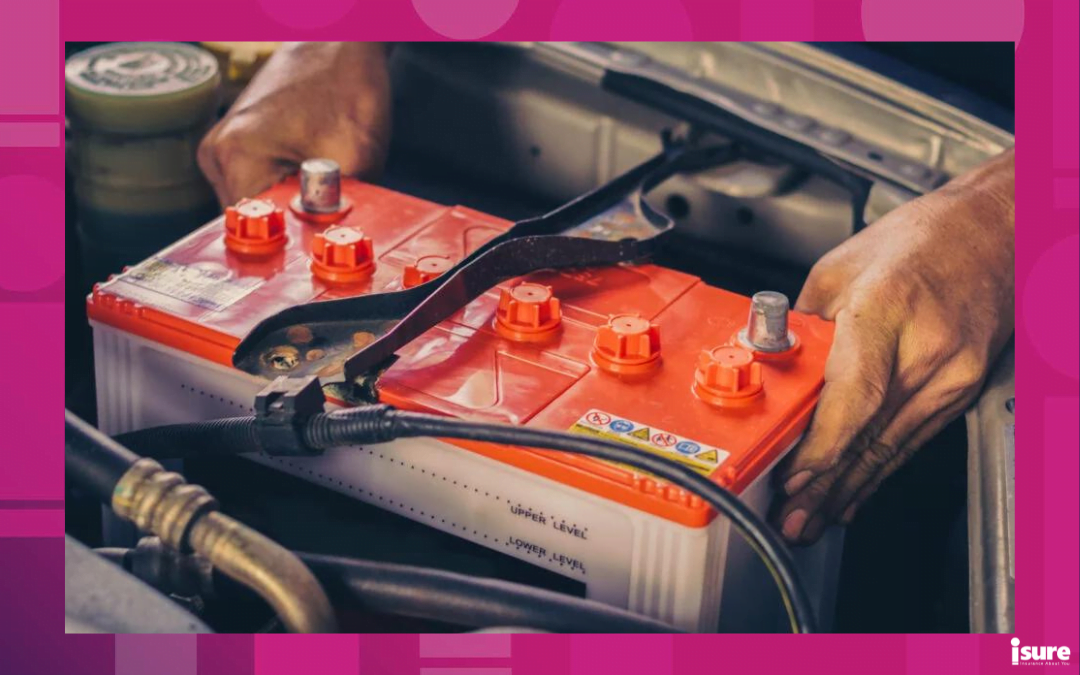
As soon as you realize your battery is dead, turn off your engine. By not doing so, you can further damage your car and end up with more than just a dead battery. This can be costly! You should be able to get yourself situated by determining where your car’s battery is and how to access it. This information is in your owner’s manual. If you don’t have that handy, a quick Google search can get the job done! Remember that if you are alone, you will also need to locate the battery on the second vehicle.

Photo: isure
2. Connect the Positive (+) Red Booster Cable to Your Car Battery First
Please check your jumper cables. From there, you should notice a positive and a negative jumper cable. These will generally be red and black. Connect the red clamp to the positive terminal of the dead battery. Make sure your connection is good by giving it a slight wiggle! If the clamp is loose, it may not work. Take the other side and clamp it to the positive terminal of the donor vehicle’s battery in the same fashion.
3. Next, Connect the Negative (-) Black Booster Cable to Your Car Battery
Now it’s time to use the negative cable. Connect the negative cable clamp to the negative terminal on the donor vehicle’s battery. Make sure this is secure. From there, take the single remaining clamp and carefully connect it to a grounding point in your vehicle. This is considered anything made of conductive metal that is attached to your vehicle’s frame. This can be an exhaust manifold bolt or an engine mount bolt. Make sure you keep a safe distance from the battery. As with finding the battery, you can do a quick Google search to locate grounding points in your vehicle.
4. Start the Donor Vehicle
This step is simple. It is time to start the donor vehicle’s engine! Ensure its alternator is charging the car battery so there is enough juice for both the car and the dead vehicle it will be charging.
5. Fire Up That Engine
Now, the moment of truth! You can hop back into your car with the dead battery and start its engine. It may take a few tries and struggle, but this is completely normal. If this is the case, however, it is important to avoid running the starter motor for more than a few seconds at a time. This will prevent overheating and allow it to cool down.
If you have been successful, it is time to wrap up! Make sure you remove all cables in the reverse order listed above and store them safely. Even if you have successfully boosted your vehicle, it is important to schedule an appointment to have your battery and charging system inspected professionally. This can prevent future dead batteries.
Parking Tips to Help Boost Your Car Battery
Whenever you park your car, you should either pull into the spot or back into it. The reason is that if the car battery is dead, it will be easier to reach the booster cables. If the front of the car is blocked, it’ll be harder to reach the hood!
Tips to Keep Your Car Battery Healthy
Batteries are the heart of the vehicle, and if yours isn’t in good shape, your vehicle won’t do you much good. By keeping your battery healthy, you can prevent unpleasant surprises and costly, annoying, or dangerous situations. Additionally, you will extend your battery’s lifespan to maximize its useful life before replacement. Here are some tips on how to keep your car battery in tip-top shape:
1. Keep Your Terminal Clean
Batteries often require cleaning to remove deposits that can build up over time. This deposit will often look like a salty substance. Keep your battery clean to extend its lifespan.
2. Drive or Start Your Car Often
Many people forget that their battery is recharged when their car is being driven. If your car sits unused for extended periods or your trips are infrequent and short, your battery is at risk. The solution for this is simple: go for a good drive about once a week if you don’t drive often. Or, at the very least, start it every few days.
3. Trickle Charging
Many drivers use a trickle charger when they know their vehicle has been unused for an extended period. A trickle charger connects to your battery and a nearby power outlet to ensure it is always topped up and ready to use.
When all else fails, know that you can rely on reputable companies to help you boost your car battery. A driver’s rule of thumb is to keep an emergency car safety kit handy at all times. Luckily, isure has got you covered with our ultimate winter safety kit, which is also useful in other seasons.
It is crucial to remember that no matter what happens, stay calm when boosting your car battery. Additionally, it’s important to have reliable car insurance in instances like these. Are you in the market for new insurance or unhappy with your current provider? Why not check out isure? Request a quote or contact us today!
Drive with Confidence
Request your free car insurance quote now and get the coverage you deserve.


isure has compiled a collection of commonly asked questions and Read more

We've got five main steps on how to take care Read more

Take some time in March through June to do some Read more