
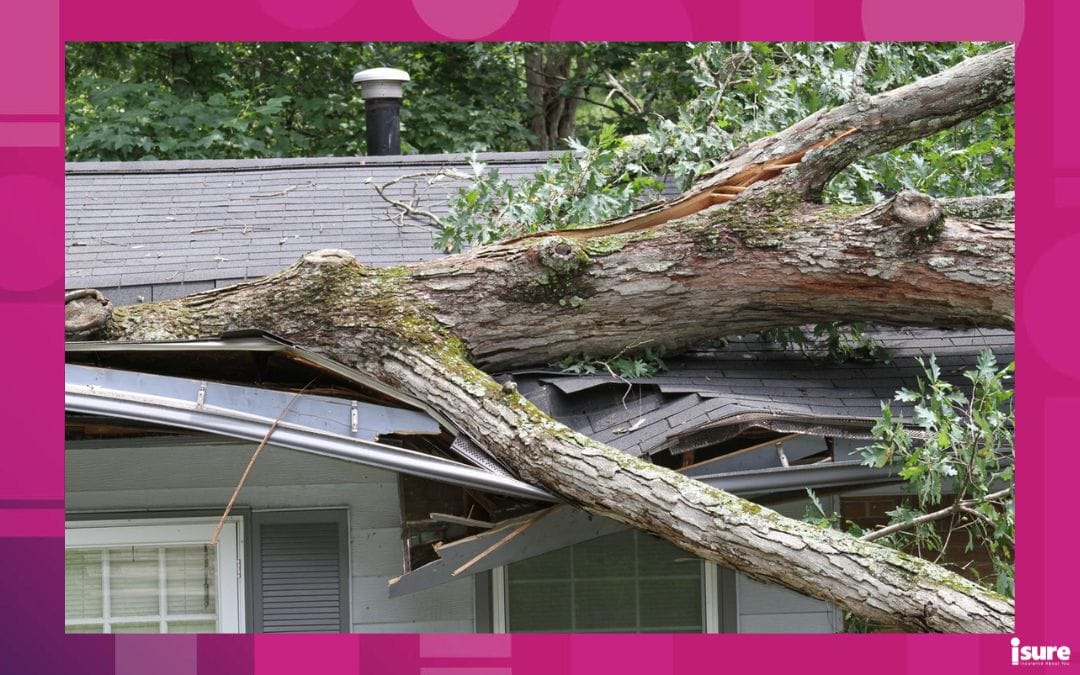
The changing seasons in Canada sometimes come with windy weather. Winds reaching up to 80 kilometres per hour will leave damage in its wake. High winds can knock over fences, bring down trees, rip siding down from homes, and blow shingles from roofs. If you experience any of these damages to your property, you’re probably wondering: Does homeowners’ insurance cover wind damage? We dive into what qualifies as wind damage and examine the types of coverages available through homeowners’ policies.
What exactly is wind damage?
Damage from the wind is known as an unavoidable loss as a result of high-force winds. It can also be due to debris or foreign objects, such as tree branches. If wind causes a foreign object to create a hole or opening in your home, any further harm to your property or belongings will be classified as wind-related damage. Research shows homeowners filed more claims between 2014 and 2018 due to wind and hail damage. In other words, this was more than any other type of loss, including fire, water damage, or theft.
What is known as wind damage under a homeowners policy?
Most damage by wind in any storm will be known as wind damage. In other words, there is typically coverage for this under a homeowners policy. Damaging winds can destroy roofs, windows, siding, and structures on your property, such as sheds.
Several types of storms or natural disasters can cause damage that typically fall under coverage in a homeowners policy:
- Tornado
- Hurricane
- Earthquake
- Thunderstorm
- Hailstorm
- Microburst
- Derecho
- Nor’easter
Understanding your coverage
Your homeowners’ insurance typically covers most types of wind damage. Dwelling coverage of your homeowner’s policy helps pay for repairs or replace damage to the roof, siding, or windows. Your policy also includes personal property coverage to help repair or replace items that suffer damage from the wind. It’s essential to be clear and review your policy coverage. Take note of coverage limits, deductibles, and exclusions. Not all damage by wind storms entitles you to coverage. If wind damages your home, you will typically have coverage on most policies. However, there are often some conditions. The policy usually covers the damage if a windstorm knocks over a tree and falls onto your house. But what many people don’t realize is that it will not pay to remove or replace the tree!
Types of Coverage
Many home insurance policies can (and do) cover wind-related damage. However, the type of policy that you have can influence whether you’ll receive coverage or not:
Named Perils
If you add wind coverage to your Named Perils insurance policy, your home and its contents will be protected. You won’t receive financial coverage if you decide not to add wind coverage to your Named Perils insurance policy.
Comprehensive ‘All-risks’
It is best to have a Comprehensive or “All-Risks” policy. This provides coverage for all types of losses except for specific exclusions.
Most home insurance policies include damage from hail and wind. If you have a comprehensive home insurance policy, you must look at the exclusions. Is hail or wind an exclusion? If not, you have coverage.
What qualifies?
According to the IBC website, coverage for wind-related damage is defined as the following:
1. Damage to homes from hail, wind, snow, or rain is usually covered. This includes:
- Losses as a result of flying debris or falling branches/trees.
- Losses to your home and contents from water or snow entering through sudden openings resulting from wind or hail.
2. A comprehensive or all-perils auto insurance policy usually covers Vehicle damage from wind, hail, ice, or water. However, these coverages are not mandatory, so check your policy.
3. Wind damage to mobile homes or trailers may be covered. Policy wordings vary, so it’s best to ask your insurance representative for more information.
4. Homeowners who cannot live in their homes because of insurable damage may be eligible for additional living expenses. However, this may only be under certain circumstances.
If you’re unable to live in your home because of insurable damage, you may be eligible for additional living expenses. However, this would be under specific circumstances. Check with one of our isure representatives to confirm the coverage in your current policy.
Protect your home
Wind-driven events can cause significant damage to your home. Taking a proactive approach to protect your investment from damage is essential. Here’s what you can do:
- Regular roof inspections
- Check your gutters and downspouts
- Inspect your siding and replace damaged sections
- Eliminate projectiles if a windstorm is imminent
FAQS about wind damage and your homeowners’ policy
Does insurance cover tornadoes in Ontario?
Have your isure broker confirm the coverage you have with your current policy. Damage to homes due to a tornado, including wind and rain, is usually covered. This can include flying debris or fallen trees and/or branches.
It varies. Some home insurance providers give policyholders up to 12 months (from the event date) to submit a wind claim, while others only give 90 days (from the event date) to take action.
How long does a wind damage insurance claim take to get approved?
It’s difficult to say. Each case has its own set of factors and variables. Initially, if your wind-related home insurance claim is cut and dry, it can take up to 48 hours. However, assessing your claim may require more time and expertise if it is more complex. As a result, more complicated cases can take up to 12 months.
Is there a timeframe for starting and finalizing a home insurance claim?
Yes. Most insurers have a time limit on when you must open your claim. Some provide you with up to one year to open and finalize it. Your insurer may allow as little as three months up to one year from the damage/loss date. However, it can be denied if you do not finalize it after one year.
Is damage to my satellite dish covered by windstorms?
Unfortunately, if your radio antennae or satellite dish is damaged, they are both standard exclusions from wind damage.
Will homeowners insurance guarantee coverage for my roof repair?
Your home insurance does cover roof damage. However, the amount of coverage you’ll receive will depend on the quality of your roof before the damaging winds. If your roof has existing issues, you will not receive as much coverage as someone with a brand-new roof. Issues may include missing shingles, rotten wood, etc.
Does homeowners insurance cover wind damage to siding?
Homeowners’ insurance will likely cover wind damage to the vinyl, metal, and other siding. Your coverage will help replace wind-damaged siding with siding that ensures a reasonably uniform visual appearance.
Does homeowners insurance cover wind damage to fences?
If you have Other Structures Coverage in your homeowners’ policy, wind damage to your fence is generally covered. Other Structures Coverage is the part of your home insurance policy that pays to repair, replace, or rebuild structures on your property that are separate from your actual home and have been damaged by a covered peril. Your payment for the fence up is only up to its current value. This would be minus the deductible and the amount the fence depreciated since its purchase.
Following extreme weather, please contact your isure broker immediately if you notice roof damage. It is essential to know that your insurer will generally try to repair the damage before replacing the entire roof. However, depending on the damage, your roof may need a complete replacement.

Buying a home? Renovating? Renting? We've got all the answers Read more

Water damage is now the most common and costly home Read more
There is nothing quite as quintessentially winter as your home Read more