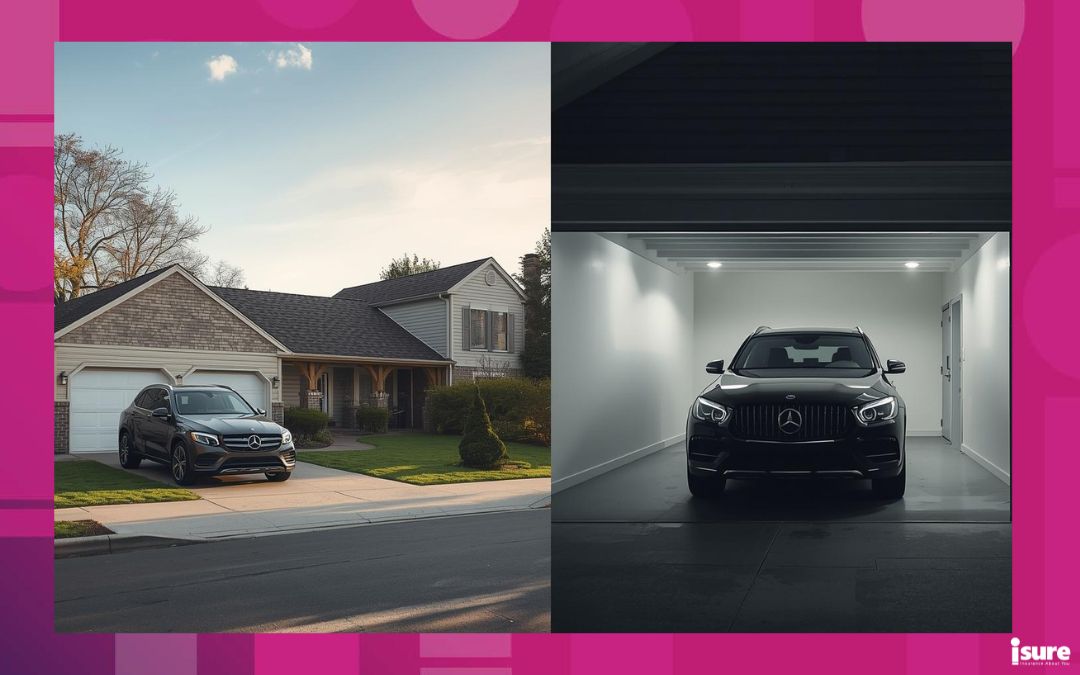
Where you park your car might seem like a small detail — but for your insurance company, it can change the level of risk your vehicle faces every day. Factors like theft rates, weather damage, vandalism, and even claim patterns in your neighbourhood help determine your premium. So, garage vs. driveway: does location impact your premium?
Garage or Driveway: Why Parking Location Matters to Insurers
Insurance premiums are based on the likelihood of a claim. Where you store your vehicle affects common risks such as:
- Theft and break-ins
- Vandalism
- Weather-related damage (hail, storms, falling branches)
- Hit-and-run incidents
- Accidental damage (scrapes, sideswipes, driveway collisions)
Insurers want to know: Is your vehicle protected, or exposed? This is where parking your car, whether it’s in a garage or driveway, matters.
Ontario has seen a 300% rise in auto theft claims since 2018, according to the IBC
Common Myths About Parking & Premiums
Myth: Parking in a garage always gives you a big discount.
Reality: Sometimes the difference is small — it depends on your area and claim patterns.
Myth: Parking on the driveway is safer than the street so it should be much cheaper.
Reality: In many postal codes, the difference is modest — but still meaningful.
Myth: Insurers don’t verify where you park.
Reality: If the parking location changes (e.g., you move), you must notify your broker.
Weather-related vehicle claims continue to grow, costing insurers over $3 billion annually across Canada.
Parking in a Garage: How It Can Lower Your Premium
Parking your vehicle inside a garage is usually seen as the lowest-risk option.
Potential Insurance Benefits
- Lower risk of theft or break-ins: Garage-stored vehicles are targeted far less often than driveway-parked cars.
- Reduced weather exposure: In Ontario, hail, ice, freezing rain, frost, and snowstorms lead to many claims.
- Lower chance of vandalism or accidental damage
- Less risk of animal damage: Raccoons, rodents, or even coyotes are less likely to access a secure garage.
Does this always lead to lower premiums? Not necessarily — but for many drivers, insurers may apply a small discount or rate reduction because the risk profile is safer.
Vehicles parked outside on a driveway are 60% more likely to be stolen in comparison to garage-stored vehicles (Canadian theft data).
Parking on a Driveway: What Insurers Consider
Parking on your driveway is very common and totally acceptable — but it does present higher risk than garage parking.
Potential Risks
- Greater exposure to weather-related damage: (hail dents, falling ice, branches, snow loads)
- Higher theft risk: Vehicles visible from the street are more likely to be targeted.
- Vandalism risk is higher than garage parking
- Driveway collisions: Delivery trucks, passing vehicles, or even backing accidents occur more often.
Does driveway parking raise your premium? It can — but often only slightly. Many insurers treat driveway and garage parking similarly unless you live in a high-theft area.
Street Parking: The Highest-Risk Option
If your alternative is parking on the street overnight, insurers usually see that as the riskiest scenario.
Why Street Parking Increases Risk
- Significantly higher theft rates
- More vulnerable to vandalism
- Elevated exposure to hit-and-run collisions
- Weather exposure is at its worst
- Passing traffic increases the chance of side-swipes or mirror damage
Impact on insurance: Street-parking can increase a premium much more noticeably than garage or driveway parking.
Private Parking Insurance Discounts May Be Possible
Your isure broker can also review whether your current coverage — especially comprehensive, which pays for theft, vandalism, weather damage, and fire — is high enough for your needs.
Tips to Reduce Risk — Even If You Park Outside
Insurance trends show why parking location matters more than ever. Auto theft in Ontario has exploded in recent years — IBC reports a 524% increase in theft-related claim costs between 2018 and 2023. At the same time, extreme weather is driving up auto claims nationwide, with catastrophic losses exceeding $3 billion in both 2022 and 2023, according to Statistics Canada. These two factors together mean vehicles stored outdoors — whether in a driveway or on the street — face greater exposure to theft, vandalism, and weather damage compared to garage-parked vehicles.
If you don’t have a garage, you can still lower your risk by:
- Installing motion lights or security cameras
- Using a steering-wheel lock
- Parking closer to your home, well-lit areas
- Removing valuables and keeping the interior clear
- Using an OBD-port lock to prevent electronic theft
- Asking your isure broker about anti-theft discounts
Even simple steps can help reduce the likelihood of a claim.
Garage vs. Driveway Parking: Conclusion
Parking location is one of the many factors insurers use to determine risk — and while garage parking is typically the safest option, driveway parking is still perfectly acceptable for most Ontario homeowners. Street parking, however, tends to carry the most risk and the highest potential premium impact.
If you want a clearer idea of how where you park affects your specific premium, our isure brokers are here to help you compare rates, explore discounts, and make the best decisions for your protection.
Drive with Confidence
Request your free car insurance quote now and get the coverage you deserve.


Parking in Ontario can be tricky, especially in bigger cities! Read more
Busy parking lots in the winter can be a nightmare Read more
If your car sits idle for long periods, you may Read more